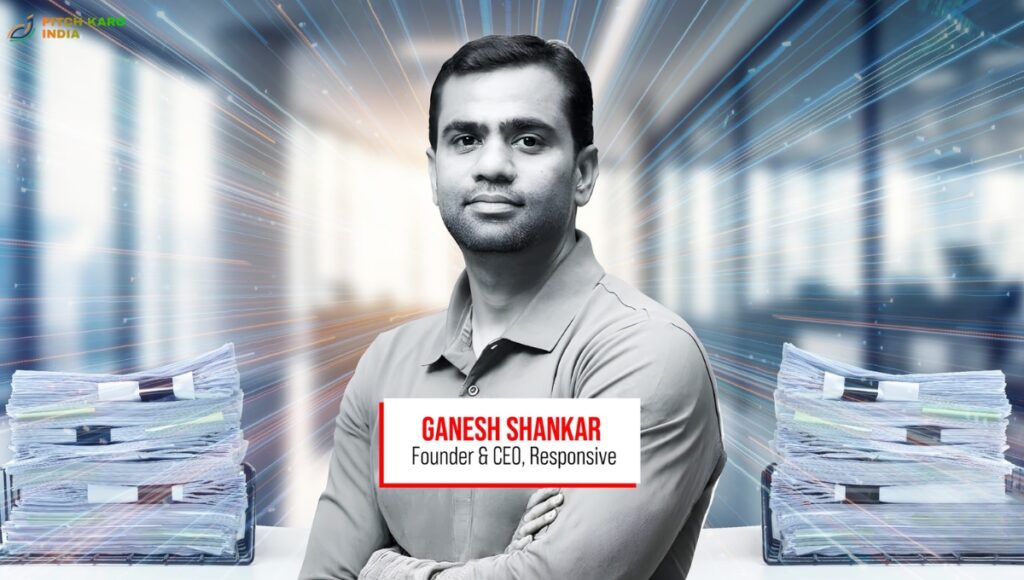
The Indian Entrepreneur Behind a $1 Trillion Startup: How Ganesh Shankar Built Software Used by Microsoft, Google, and Walmart
Success stories often begin in unexpected places. Sometimes they start in a garage, sometimes in a college dorm room, and sometimes in a small two-room home where dreams are much bigger than the space available. Ganesh Shankar’s story belongs to the last category. He did not come from a famous business family, nor did he become a celebrity entrepreneur overnight. In fact, millions of people in India have never heard his name. Yet the software company he built quietly powers some of the world’s biggest corporations, including Microsoft, Google, Walmart, Oracle, SAP, Amazon Web Services, and many others.
What makes this story remarkable is not just the scale of the business, but the simplicity of the problem it solves. Every year, businesses across the world compete for contracts worth billions of dollars. Before winning those contracts, they must respond to lengthy documents known as Requests for Proposals (RFPs) or tenders. These documents are often filled with hundreds of repetitive questions about products, security, compliance, pricing, technical capabilities, and company policies. Completing them is time-consuming, frustrating, and expensive.
Ganesh Shankar saw an opportunity where most people only saw paperwork. Instead of creating another social media platform or consumer app, he decided to solve a problem that businesses face every single day. That decision eventually led to the creation of Responsive, a company whose software has now processed more than $1 trillion worth of business opportunities.
A Humble Beginning That Shaped an Extraordinary Journey
Ganesh Shankar grew up in Coimbatore, Tamil Nadu, in a modest two-room house. Like countless middle-class Indian families, resources were limited, but ambition was not. His early years taught him the importance of hard work, patience, and persistence.
Interestingly, computer science was not something he initially wanted to pursue. Despite living in a country where engineering is often considered the safest career path, Shankar believed it was not the right fit for him. His professional journey began in a completely different direction. He worked in mutual fund sales, learning how businesses operate, how customers make decisions, and why trust matters in every transaction.
Those early experiences would later become valuable lessons. Instead of only understanding technology, he learned to understand people and business problems, a combination that would prove far more powerful.
Finding Opportunity in Everyday Business Challenges
Most startups chase glamorous ideas that attract headlines. Ganesh Shankar chose something very different. Every large organisation buys products and services through formal procurement processes. Whether a bank is looking for cloud infrastructure, a hospital needs new software, or a multinational corporation wants cybersecurity solutions, vendors are asked to submit detailed responses to RFPs.
These documents can contain hundreds of questions, many of which have already been answered countless times in previous proposals. Sales teams often spend days searching through old files, emailing engineers, contacting legal departments, and gathering information that already exists somewhere inside the company.
This repetitive process wastes enormous amounts of time and money. Shankar realised that businesses did not need another communication platform. They needed a smarter way to organise, reuse, and automate proposal responses. That insight became the foundation of his company.
The Birth of Responsive
The company was originally launched as RFPIO, reflecting its focus on Request for Proposal management. As the platform expanded beyond traditional RFPs, the company rebranded itself as Responsive in 2023.
The new name reflected a broader vision. Instead of simply helping companies answer tender documents, Responsive evolved into an intelligent platform that supports knowledge management, proposal collaboration, security questionnaires, and AI-assisted business communication.
Today, organisations use the platform to respond faster, maintain consistency, reduce manual work, and improve their chances of winning valuable contracts.
Quietly Powering the World’s Biggest Companies
One of the most fascinating parts of Responsive’s journey is its customer list.
The platform is trusted by technology giants like Microsoft, Google, Oracle, SAP, AWS, and Walmart. It is also used by healthcare leaders, financial institutions, pharmaceutical companies, and global enterprises including UnitedHealth, Roche, and BBVA.
According to the company, nearly 2,000 organisations, more than 20 per cent of Fortune 500 companies, and over 300,000 users worldwide rely on Responsive.
Microsoft alone has reportedly been using the platform since 2019, with over 25,000 employees utilising it across different teams. Microsoft’s proposal teams have credited the platform with supporting business opportunities that generated more than $10 billion in revenue.
This demonstrates how software operating behind the scenes can influence some of the world’s largest commercial deals without ever becoming a household name.
Crossing the Historic One Trillion Dollar Milestone
In March this year, Responsive achieved a milestone that very few enterprise software companies can claim. The total value of business opportunities processed through its platform crossed $1 trillion.
The company officially announced this achievement on May 13 from its headquarters in Portland, Oregon. Ganesh Shankar also revealed that approximately $30 billion worth of live opportunities now flow through the platform every month.
This figure is remarkable because Responsive is not handling payments or financial transactions directly. Instead, it manages the proposal process that helps companies compete for these massive contracts. In many ways, the platform has become the invisible infrastructure behind global enterprise sales.
Built in India, Trusted Across the World
Although Responsive is legally headquartered in the United States, much of its engineering work happens in India. Its major development centre is located on the ninth floor of Ticel Park, inside Anna University Campus in Coimbatore, with the beautiful Marudhamalai Hills standing in the background.
This office represents a growing trend in India’s technology landscape. Instead of serving only domestic customers, Indian engineering teams are increasingly building products for global markets from day one.
The developers working in Coimbatore contribute to software that supports some of the largest corporations in the world. It is a powerful reminder that world-class innovation does not always come from Silicon Valley.
Why Most Indians Have Never Heard of Responsive
Considering its impressive achievements, many people wonder why Responsive remains relatively unknown in India.
There are several reasons. Unlike many startups, Responsive has not relied on frequent venture capital funding announcements to stay in the news. The company has not raised outside funding since 2018, meaning it rarely appears in startup investment reports that dominate technology headlines.
Another reason is its customer focus. Responsive primarily serves international enterprise clients rather than Indian consumers. Since it does not market products directly to the public, there is very little brand visibility among everyday users.
The company also changed its name from RFPIO to Responsive, making it even harder for casual observers to connect its current success with its earlier identity. As a result, the company has quietly continued growing without attracting unnecessary attention.
Profitable Growth Over Startup Hype
Many startups celebrate billion-dollar valuations before they become profitable. Responsive followed a completely different path. The company has reportedly been profitable since 2018 and continues to grow at more than 25 per cent annually. Rather than chasing valuation headlines or raising massive investment rounds, the company has focused on building sustainable revenue and serving customers.
This approach reflects an increasingly important lesson for entrepreneurs. Real business success is not measured only by valuation. Long-term profitability, loyal customers, and consistent growth often create stronger companies than temporary investor excitement.
Solving a Problem That AI Can Transform
Artificial Intelligence is now changing how businesses manage proposals. Instead of manually searching thousands of previous documents, AI can quickly locate accurate answers, recommend responses, summarise technical information, and even generate first drafts.
Responsive has embraced this shift by integrating AI into its platform, helping organisations complete proposal work more efficiently while maintaining accuracy.
As enterprise AI adoption accelerates, software platforms that organise institutional knowledge will become even more valuable. Ganesh Shankar recognised this opportunity years before AI became the biggest trend in technology.
Leadership Built on Understanding Customers
One reason Responsive has succeeded is its deep understanding of customer pain points. Ganesh Shankar’s background in sales allowed him to see the proposal process from the customer’s perspective.
Rather than building technology for the sake of innovation, he focused on removing friction from an existing business process. That customer-first mindset continues to define the company’s culture.
Instead of asking, “What technology should we build?” the company asks, “What problems are businesses trying to solve?” This subtle difference often separates successful enterprise software companies from those that struggle to find product-market fit.
A New Definition of Indian Entrepreneurship
India has produced many globally recognised entrepreneurs in recent years.
Some built payment platforms. Others created e-commerce giants. Many focused on consumer technology. Ganesh Shankar represents another category altogether. His success proves that entrepreneurs do not need millions of app downloads or celebrity status to build meaningful businesses.
Enterprise software may not receive as much public attention, but it often creates enormous value by solving critical business problems. Responsive’s journey highlights the growing strength of Indian founders who are building globally competitive Software-as-a-Service (SaaS) companies.
Lessons Every Entrepreneur Can Learn
Ganesh Shankar’s story offers valuable lessons for aspiring founders. The biggest opportunities often exist in problems that everyone else ignores. Simple, repetitive business processes can become billion-dollar markets when solved effectively.
Profitability matters. Sustainable businesses are built by creating value for customers rather than constantly chasing funding rounds. Global companies can be built from Indian cities. Geography is no longer a barrier when talent, technology, and vision come together. Most importantly, success does not always require public recognition. Some of the world’s most influential companies quietly operate behind the scenes, powering industries that ordinary consumers rarely notice.
The Road Ahead
The demand for enterprise software continues to grow as organisations become more digital and AI-driven. Businesses now need faster collaboration, better knowledge management, stronger compliance, and intelligent automation. Responsive is well positioned to benefit from these trends.
With AI becoming a central part of enterprise workflows, proposal management platforms are likely to evolve into broader business intelligence systems that help organisations respond faster, make better decisions, and win more business. If the company continues its current trajectory, its influence could expand even further over the coming decade.
Conclusion
Ganesh Shankar’s journey is a refreshing reminder that extraordinary success does not always arrive with loud headlines or viral social media posts. From growing up in a modest home in Coimbatore to leading a company whose software has supported more than $1 trillion in business opportunities, his story reflects the power of persistence, practical thinking, and solving real-world problems.
Responsive has quietly become an essential part of global enterprise operations, trusted by some of the world’s biggest organisations while remaining largely unknown to the general public. In an era where startup success is often measured by funding announcements and media attention, Responsive stands out by proving that profitability, innovation, and customer value can build an equally powerful legacy.
Ganesh Shankar’s success is not just an inspiring entrepreneurial story. It is also a symbol of India’s growing ability to create world-class enterprise software that competes on a global stage. Sometimes the biggest achievements are not the ones everyone talks about, but the ones that silently shape how the world does business.