How Utkarsh Gupta And Dishant Daryani Built Comet Into A New-Age Indian Sneaker Brand
Comet: There is something special about a good pair of sneakers. They are not just something you wear on your feet. For many people, sneakers have become a part of their personality, their everyday style and even the way they express themselves. This changing relationship with footwear has created exciting opportunities for young Indian brands, and Comet, also known as WearComet, is one of the names that has stepped into this space with a distinctly modern identity.
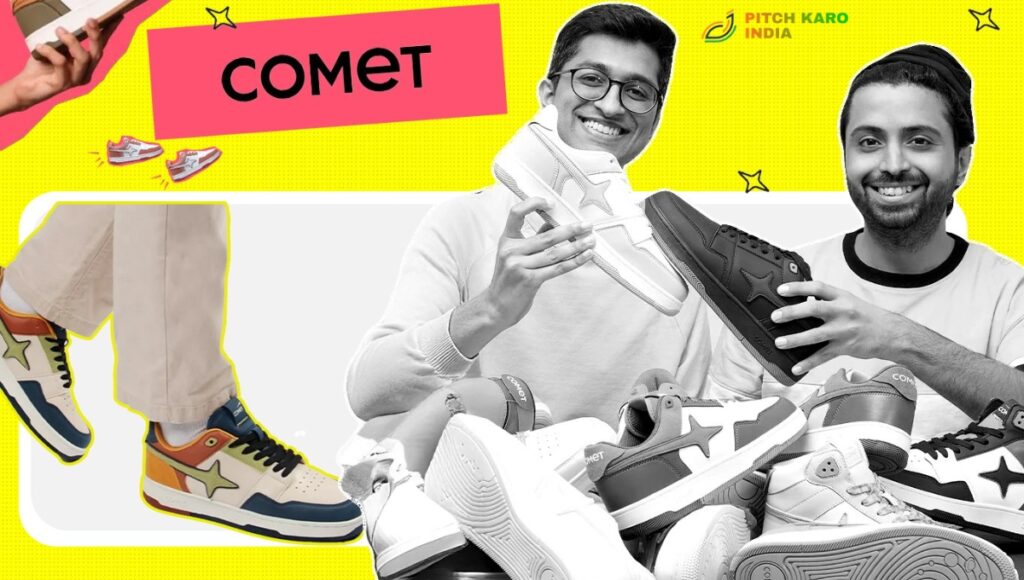
Founded in 2023 by Utkarsh Gupta and Dishant Daryani, Comet is an Indian direct-to-consumer sneaker brand that has built its identity around retro-inspired designs and a fresh approach to everyday footwear. The company’s story is particularly interesting because its founders came from strong academic and professional backgrounds before entering the world of entrepreneurship. Utkarsh Gupta is the company’s co-founder and CEO, while Dishant Daryani is its co-founder. Their backgrounds include institutions and organisations such as the London School of Economics, Kellogg School of Management, IIT Bombay, Harvard Business School, Bain & Company and Hotstar.
But Comet’s story is not simply about where its founders studied or where they worked before starting the company. At its heart, it is about recognising how Indian consumers are changing the way they think about sneakers and creating a brand that feels connected to that shift.
The Beginning of Comet
Was Comet founded in 2023 by brothers? No, the provided information identifies Utkarsh Gupta and Dishant Daryani as the co-founders, without describing them as brothers. The company entered India’s footwear market as a direct-to-consumer brand with a focus on retro-styled sneakers. This positioning gave Comet a clear personality from the beginning.
The sneaker market has changed dramatically over the years. Sneakers were once viewed mainly as sports shoes or casual footwear, but today they occupy a much larger space in everyday fashion. People wear sneakers with jeans, trousers, shorts and even outfits that would traditionally have been paired with more formal footwear. This cultural change has opened the door for brands that understand sneakers as both functional products and fashion statements.
Comet’s retro-inspired identity fits into this broader movement. Rather than trying to make footwear that feels disconnected from existing sneaker culture, the brand draws inspiration from familiar classic styling while presenting it through a contemporary Indian D2C brand.
A New Generation of Indian Sneaker Consumers
The rise of India’s sneaker culture has created a new generation of consumers who care about more than simply having something comfortable to wear. Design, personality, brand identity and overall aesthetic have become increasingly important when people decide which sneakers they want to buy.
Social media has played a major role in this transformation. Instagram, YouTube and other digital platforms have made sneakers much more visible as fashion products. A consumer can discover a new sneaker brand through a short video, see how the shoes look with different outfits, read customer opinions and then make a purchase online.
This environment is particularly useful for D2C companies because they can communicate directly with consumers without depending entirely on traditional retail stores. A brand can build its visual identity online and create a community around its products.
Comet entered this environment with a brand that is closely connected to contemporary sneaker culture. Its retro styling gives the company a recognisable visual direction, while its D2C model allows it to communicate directly with customers.
The Story Behind Utkarsh Gupta
Utkarsh Gupta serves as the Co-founder and CEO of Comet. According to the information provided, he is an alumnus of the London School of Economics and Kellogg School of Management and previously worked with Bain & Company and Hotstar.
These experiences represent a combination of business education and exposure to large-scale professional environments. Moving from established organisations into entrepreneurship, however, is a completely different challenge.
At a large company, founders and executives often work within established systems, teams and processes. Building a startup requires creating many of those systems from scratch. Entrepreneurs have to think about products, customers, marketing, operations, finances, hiring and growth at the same time.
For Gupta, building Comet meant taking his professional experience and applying it to a consumer brand in a highly competitive category. Footwear is an industry where customers have countless choices, so developing a brand that people remember requires more than simply launching a product.
The Story Behind Dishant Daryani
Dishant Daryani is the other co-founder of Comet. The information provided describes him as an IIT Bombay and Harvard Business School graduate.
Those institutions are known for strong academic and professional networks, but academic credentials alone do not build a consumer company. The real test comes when founders have to turn an idea into something customers are willing to purchase and recommend.
Daryani’s involvement in Comet represents the entrepreneurial side of a journey that moved from prestigious educational institutions into India’s rapidly changing consumer market. Together with Gupta, he is helping shape a brand that is attempting to establish its own identity in the sneaker category.
Why the Retro Sneaker Style Matters
The retro sneaker aesthetic is an important part of Comet’s identity. Fashion has a habit of bringing old styles back in new ways, and sneakers are no exception.
Retro-inspired footwear can create a feeling of familiarity while still looking fresh. Classic shapes, proportions and design references often remind consumers of earlier sneaker eras, but modern brands can reinterpret those ideas for today’s customers. This creates an interesting balance. A sneaker can feel nostalgic without looking outdated.
For a young brand like Comet, this kind of visual language can also help create a recognisable identity. When customers see a particular style repeatedly across a company’s website, social media content and product range, they begin to associate that aesthetic with the brand itself.
The Power of the D2C Model
Comet’s direct-to-consumer model is another important part of its journey. D2C brands have changed the way many Indian startups approach consumer businesses.
Instead of building a huge network of physical stores from the beginning, a D2C company can use its online presence to introduce products directly to potential customers. The website becomes more than a place to complete a purchase. It becomes a space where the brand can explain its personality, display its products and communicate its values.
Digital marketing makes this relationship even more powerful. A sneaker brand can show customers how a particular design looks, share styling ideas, tell stories about its products and respond to feedback through social media.
This direct relationship can also give companies access to useful customer insights. If people repeatedly ask questions about sizing, colours, designs or comfort, those conversations can provide valuable information about what consumers want. For a growing footwear brand, staying close to customers can be a major advantage.
Why Indian Sneaker Startups Are Getting Attention
India’s consumer market has changed considerably in recent years. Younger buyers are increasingly comfortable discovering and purchasing products from digital-first brands. This has created opportunities across fashion, beauty, food, electronics and footwear. Sneakers are particularly interesting because they sit at the intersection of comfort, lifestyle and fashion.
Consumers do not necessarily want to buy the same products everyone else owns. They often want brands that feel different and have a personality that matches their own. That is where emerging sneaker companies can compete with larger established players.
A young brand does not necessarily have to beat every major footwear company on scale. Instead, it can focus on building a strong connection with a specific audience and creating products that feel distinctive. Comet’s retro-inspired identity gives it a clear starting point in this competitive environment.
More Than Just Another Pair of Sneakers
A successful sneaker company has to sell more than a physical product. Customers are buying into a feeling. They want something that looks good, feels comfortable and fits naturally into their lifestyle. The brand behind the sneaker can influence that decision just as much as the shoe itself. This is why storytelling matters in modern consumer businesses.
When a company has a clear reason for existing, customers can understand it more easily. They can see what makes it different from other brands and why they might want to become part of its community. Comet’s identity as a modern Indian D2C sneaker company with a retro-inspired design direction gives it a foundation for building that kind of connection.
The Importance of Brand Identity
The footwear market is crowded. Consumers can choose from international brands, established Indian companies, fashion labels, sports brands and an increasing number of startups. In such a market, simply making sneakers is not enough. A company needs a recognizable identity. That identity can come from design, storytelling, packaging, communication, pricing, customer experience or a combination of all these things.
View this post on Instagram
Comet’s name, digital-first approach and retro-inspired styling contribute to its identity. The brand has an opportunity to become recognisable not just because of individual shoe designs, but because of the overall feeling associated with the company. That can become especially important as the business grows.
The Role of Social Media in Comet’s Growth
Modern sneaker brands have a major advantage that earlier footwear companies did not have to the same extent: social media. A new sneaker can be introduced through a short video instead of a traditional advertisement. Customers can show how they style it. Creators can review it. The brand can respond to questions publicly. A single design can become part of a larger online conversation. This is particularly powerful for visually driven products such as sneakers.
A consumer may discover Comet without actively searching for a footwear brand. They might encounter one of its products while scrolling through social media and become curious because of its design. That discovery-to-purchase journey is one of the major strengths of the digital-first consumer economy.
From Professional Careers to Entrepreneurship
The backgrounds of Comet’s founders also highlight an increasingly common path in India’s startup ecosystem. Both Utkarsh Gupta and Dishant Daryani came from strong academic and professional environments. Instead of remaining within conventional career paths, they chose to build a consumer company.
Entrepreneurship can look exciting from the outside, but the reality is far more demanding. Founders have to deal with uncertainty, competition, customer expectations and financial pressure. They must make decisions without always having complete information.
Building a sneaker company adds another layer of complexity because physical products involve manufacturing, inventory, quality control, logistics, returns and sizing.
The founders therefore have to balance creativity with business discipline. A beautiful sneaker may attract attention, but a sustainable company needs much more than a good design.
The Challenge of Building a Footwear Brand
The Indian sneaker market offers huge potential, but it is also highly competitive. Customers have become more aware of international trends and have access to a wide range of choices. This means an emerging brand has to work hard to convince people to try something new. Product quality becomes essential. So does comfort. Sizing needs to be reliable, customer service needs to be responsive, and delivery experiences need to meet expectations. At the same time, the brand has to continue creating excitement.
This is one of the hardest parts of building a consumer company. A startup may receive attention after launching, but maintaining that attention over several years requires continuous effort. Comet’s long-term success will depend not only on its ability to create attractive sneakers but also on how well it develops the wider customer experience around them.
The Bigger Opportunity in India’s Sneaker Culture
India’s growing interest in sneakers represents a larger cultural change. Sneakers are no longer restricted to athletes or people heading to the gym. They have become everyday fashion items for students, professionals, creators and consumers across different age groups. This shift creates a large opportunity for brands that can understand what Indian consumers want.
There is also an opportunity to develop designs that feel appropriate for Indian lifestyles rather than simply copying what is popular internationally.
Indian consumers are increasingly comfortable experimenting with fashion, and sneakers provide an easy way to add personality to an outfit. This gives brands like Comet plenty of room to experiment with silhouettes, colours, collaborations and storytelling.
What Comet’s Journey Can Teach Entrepreneurs
The Comet story offers a useful lesson for aspiring entrepreneurs. You do not always need to enter a completely new industry to build something interesting. Sometimes, an established category still contains significant room for innovation. The key is understanding what consumers are looking for and finding a way to present a familiar product differently.
Comet entered footwear, a category that already had countless competitors. Its focus on retro-inspired sneakers and a D2C business model gave it a starting point for differentiation.
The next challenge is turning that initial identity into a lasting brand. That requires consistency. A company needs to keep its product quality strong, understand its customers and evolve without losing the character that made people notice it in the first place.
The Road Ahead for Comet
Comet’s journey is still relatively young, having begun in 2023. That means the company is at an interesting stage of its development. The early years of a consumer startup are often about discovering what works. Founders learn which products customers love, which messages resonate, which marketing channels perform best and where the company needs to improve. As Comet grows, its ability to maintain a clear identity while expanding will become increasingly important.
The sneaker industry rewards brands that can create emotional connections with consumers. People often remember the story behind a product as much as the product itself. For Comet, the opportunity is to turn its retro-inspired aesthetic and digital-first approach into a broader lifestyle identity.
If it can continue understanding its audience while developing products that people genuinely want to wear, the company has an opportunity to become a recognisable name in India’s growing sneaker ecosystem.
A Young Brand With a Clear Identity
The story of Comet is ultimately a story about two founders entering a fast-changing consumer market and trying to create something that feels relevant to a new generation of Indian sneaker buyers.
Utkarsh Gupta, with his background at the London School of Economics, Kellogg School of Management, Bain & Company and Hotstar, brings a strong mix of education and professional experience to the company. Dishant Daryani, an IIT Bombay and Harvard Business School graduate, brings another strong academic foundation to the founding team.
But the real story is what they are building together.
Comet’s identity is rooted in retro-inspired sneakers, digital-first distribution and the growing appetite for distinctive Indian consumer brands. Its journey reflects a broader transformation taking place in India’s fashion and lifestyle market, where consumers are increasingly willing to discover new brands online and make purchasing decisions based on design, personality and connection. The company’s future will depend on how successfully it turns those early foundations into a lasting brand.
For now, Comet represents an interesting example of how India’s startup ecosystem is moving beyond traditional categories. Sneakers may be an old product, but the way consumers discover, buy and connect with them is changing rapidly. And sometimes, that is exactly where the most exciting opportunities begin.
Disclaimer: This article is based on the information provided about Comet, also known as WearComet, its founders and its business positioning. It is intended for informational and educational purposes only. Founder backgrounds, company operations, product offerings, pricing, funding, ownership and other business details may change over time. Readers should verify the latest information through Comet’s official channels and other reliable sources before making any business, investment or purchasing decisions.