Zypp Electric Founders: From Startup Dream To India’s EV Logistics Leader
Zypp Electric: There was a time when electric vehicles in India were seen as an expensive experiment with limited use. Most people believed they were only suitable for short city rides, and businesses were hesitant to adopt them for commercial operations. But a few entrepreneurs saw an opportunity where others saw uncertainty. They believed electric mobility could transform not only transportation but also the future of last-mile delivery in India. That belief gave birth to Zypp Electric, a company that has grown into India’s largest EV-as-a-service and electric logistics platform.
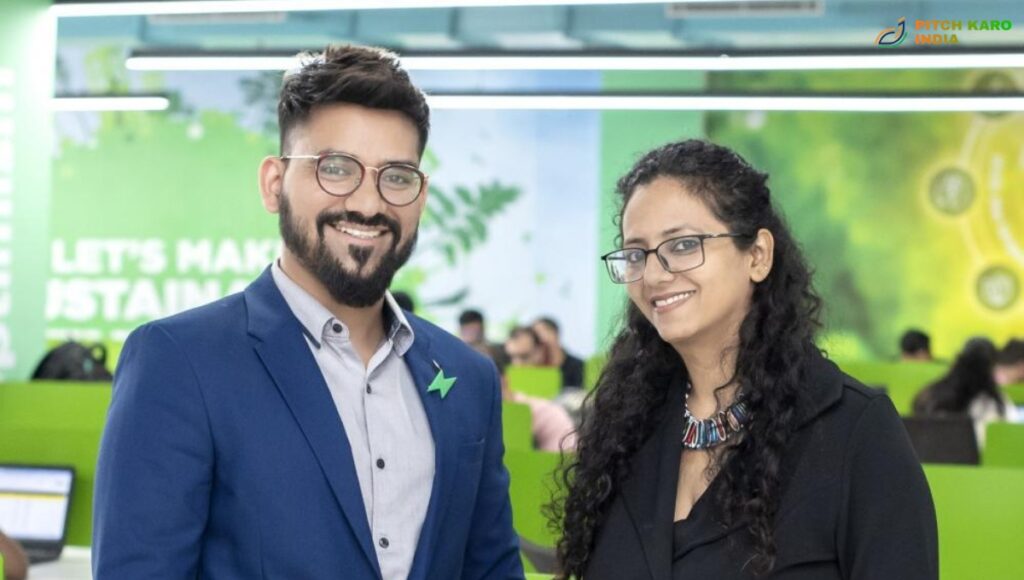
Founded in 2017 by Akash Gupta and Rashi Agarwal, and later strengthened by Tushar Mehta as Chief Operating Officer, Zypp Electric has become one of India’s most recognised EV startups. What began as a bicycle-sharing platform called Mobycy eventually evolved into a business that is helping thousands of delivery partners earn a livelihood while reducing pollution across Indian cities.
The story of Zypp Electric is not just about electric scooters or logistics. It is about identifying a real-world problem, adapting to changing market conditions, and having the courage to reinvent an entire business model. It is a journey filled with challenges, bold decisions, innovation, and a clear mission to build a cleaner and smarter India.
The Beginning of Zypp Electric
Zypp Electric was established in 2017 with a vision to promote sustainable transportation. The startup was founded in Gurugram, Haryana, by entrepreneurs Akash Gupta and Rashi Agarwal, who wanted to solve one of India’s growing urban problems: increasing traffic congestion and environmental pollution.
Initially, the company was launched under the name Mobycy, a bicycle-sharing platform. At that time, shared mobility was gaining popularity around the world, and many startups were introducing bicycle rental services in metropolitan cities.
The founders believed that bicycles could offer an affordable and eco-friendly transportation solution for short-distance travel. Their goal was to encourage healthier lifestyles while reducing dependency on fuel-powered vehicles.
Although the concept received attention, the founders soon realised that India’s mobility ecosystem required something much larger than bicycle sharing.
Meet Akash Gupta: The Visionary Entrepreneur
Akash Gupta is the Co-Founder and Chief Executive Officer (CEO) of Zypp Electric. His entrepreneurial journey reflects the mindset of a leader who constantly looks for opportunities to solve real-life challenges through innovation.
Before launching Zypp Electric, Akash gained valuable experience in business strategy, technology, and entrepreneurship. He closely observed how urban transportation was evolving across the globe and understood that India would eventually need sustainable mobility solutions.
Instead of following conventional business models, Akash focused on identifying sectors where electric vehicles could create the greatest impact. He realised that delivery services were expanding rapidly due to the growth of e-commerce, food delivery, grocery platforms, and quick commerce.
This insight became the turning point in Zypp Electric’s journey. Rather than competing in consumer transportation alone, Akash envisioned an ecosystem where electric vehicles could power India’s booming logistics industry. His leadership helped the company shift its direction at the right time, a decision that would eventually define its success.
Rashi Agarwal: Building the Business with Strategy
Every successful startup requires a strong business strategist, and for Zypp Electric, that role has been played by Rashi Agarwal, the company’s Co-Founder and Chief Business Officer (CBO).
Rashi has been instrumental in developing business partnerships, customer relationships, expansion strategies, and operational growth. From the early days of Mobycy to the transformation into Zypp Electric, she played a crucial role in understanding customer behaviour and identifying new market opportunities.
Her ability to build strategic collaborations with logistics companies, delivery platforms, and corporate clients helped Zypp Electric scale its services rapidly. She also focused on ensuring that sustainability remained at the heart of every business decision.
Tushar Mehta: Strengthening Operations
As the company expanded, efficient operations became increasingly important. To support large-scale growth, Tushar Mehta joined the leadership team as Chief Operating Officer (COO).
His expertise in operations, logistics management, and execution helped Zypp Electric streamline fleet management, improve rider support, optimise delivery operations, and strengthen customer satisfaction.
With thousands of electric vehicles operating daily, operational excellence became one of the company’s biggest competitive advantages.
The Journey from Mobycy to Zypp Electric
One of the most remarkable chapters in the company’s history was its transformation from Mobycy to Zypp Electric. Many startups hesitate to change their original business model, even when market conditions shift. Akash Gupta and Rashi Agarwal chose a different path.
After carefully studying consumer behaviour and industry trends, they realised that the demand for bicycle-sharing was limited compared to the massive opportunity in electric delivery vehicles. India’s digital economy was expanding rapidly. Food delivery companies were receiving millions of orders every day. Online grocery platforms were growing at an unprecedented pace.
E-commerce businesses needed reliable delivery partners. All these companies required affordable, efficient, and environmentally friendly transportation. The founders decided to completely reposition their business.
Instead of simply renting bicycles, they introduced electric scooters specifically designed for commercial delivery operations. This bold decision transformed Mobycy into Zypp Electric.
Changing the Perception of Electric Vehicles
- During the early years, many people believed electric scooters lacked power, range, and reliability.
- Businesses were unsure whether EVs could handle long delivery hours.
- Delivery partners worried about battery performance and charging infrastructure.
- The founders understood that changing technology alone was not enough.
- They also had to change public perception.
- Instead of marketing electric scooters as a niche product, Zypp Electric positioned them as a practical solution for everyday businesses.
- The company demonstrated that EVs could reduce operational costs, improve earnings for riders, and significantly lower carbon emissions.
- This shift in perception became one of the company’s greatest achievements.
Solving India’s Last-Mile Delivery Problem
India’s last-mile delivery market has witnessed explosive growth over the past decade. Food delivery, pharmacy deliveries, grocery services, courier companies, and quick-commerce platforms require millions of deliveries every day.
Traditional petrol-powered scooters involve rising fuel expenses, maintenance costs, and environmental pollution. Zypp Electric introduced an EV-as-a-Service model that addressed these challenges.
Instead of asking delivery executives to purchase electric scooters, the company offered vehicles on flexible rental plans. This allowed riders to start earning without making large upfront investments. The model proved beneficial for both businesses and delivery partners.
What Makes Zypp Electric Different?
Unlike traditional vehicle rental companies, Zypp Electric provides a complete ecosystem. The company offers electric scooters, battery support, servicing, maintenance, insurance, rider assistance, and fleet management.
Delivery partners receive vehicles that are specifically optimised for commercial use. Businesses benefit from reliable transportation without worrying about fleet ownership or maintenance. This integrated approach has helped the company build long-term partnerships with leading delivery platforms across India.
Rapid Expansion Across Indian Cities
After successfully validating its business model, Zypp Electric expanded into multiple metropolitan cities. The company steadily increased its fleet while serving industries such as food delivery, grocery logistics, e-commerce, pharmacy deliveries, and courier services.
Its presence in urban markets has enabled thousands of delivery professionals to switch from petrol vehicles to electric mobility. The expansion also reflects the growing confidence of businesses in sustainable transportation solutions.
Funding and Investor Confidence
As Zypp Electric demonstrated consistent growth, investors began recognising its potential. The startup attracted funding from prominent venture capital firms, angel investors, and institutional backers who believed in India’s electric mobility revolution.
View this post on Instagram
These investments allowed the company to expand its fleet, improve technology, strengthen charging infrastructure, and hire experienced professionals. Investor confidence also validated the founders’ long-term vision for sustainable logistics.
Supporting Delivery Partners
One of Zypp Electric’s strongest contributions has been empowering gig workers. Many delivery executives struggle with rising fuel costs that reduce their daily earnings. Electric vehicles significantly lower operating expenses.
By providing affordable rental options and reliable support services, Zypp Electric helps riders increase their income while reducing financial pressure. This social impact has become an important part of the company’s identity.
Sustainability at the Core
Environmental responsibility has always been central to Zypp Electric’s mission. Every electric vehicle on the road replaces a petrol-powered alternative that produces harmful emissions. As more riders adopt electric scooters, cities experience cleaner air and lower carbon emissions. The company contributes to India’s broader sustainability goals while promoting responsible urban transportation.
Technology Driving the Business
Zypp Electric uses advanced technology to manage its growing fleet. Digital platforms enable vehicle tracking, rider management, maintenance scheduling, route optimisation, and performance monitoring.
These technology-driven systems improve operational efficiency and help businesses maintain reliable delivery services. The company’s ability to combine software with electric mobility has strengthened its competitive advantage.
Building Strategic Partnerships
A major factor behind Zypp Electric’s success has been its partnerships with leading logistics, food delivery, grocery, and e-commerce companies.
Instead of competing with these businesses, Zypp became an infrastructure partner supporting their daily operations. These collaborations have accelerated the adoption of electric vehicles in commercial transportation.
Leadership Philosophy
Akash Gupta believes innovation should solve practical problems rather than create unnecessary complexity. Rashi Agarwal emphasises building long-term relationships with customers and business partners.
Tushar Mehta focuses on operational excellence and scalable systems. Together, the leadership team has created a company culture based on sustainability, customer success, technological innovation, and continuous improvement.
Challenges Along the Way
- The road to success was not without obstacles.
- The founders had to convince investors that electric mobility represented a viable long-term opportunity.
- Charging infrastructure was still developing.
- Many delivery executives were unfamiliar with electric vehicles.
- Consumer confidence needed to be built gradually.
- Competition increased as more companies entered the EV market.
Despite these challenges, Zypp Electric continued to innovate, improve its services, and expand its customer base.
The Impact on India’s EV Industry
Zypp Electric has played a major role in accelerating electric mobility adoption within commercial logistics. Its success has encouraged businesses to consider EV fleets as a practical alternative to conventional transportation. The company has also inspired entrepreneurs to build startups around sustainable mobility, battery technology, fleet management, and clean transportation solutions.
Lessons Every Entrepreneur Can Learn
The journey of Zypp Electric offers valuable lessons for aspiring entrepreneurs. One of the biggest lessons is the importance of adapting to market realities. The founders did not remain attached to their original bicycle-sharing idea when they realised a larger opportunity existed. Instead, they reinvented their business. Another lesson is that solving real-world problems creates sustainable businesses.
Rather than chasing temporary trends, Zypp Electric focused on reducing costs, improving efficiency, and protecting the environment. The company’s success also highlights the importance of strong leadership, teamwork, resilience, and continuous innovation.
The Future of Zypp Electric
As India’s electric mobility ecosystem continues to expand, Zypp Electric is well positioned for future growth. The company aims to increase its electric fleet, strengthen battery infrastructure, expand into new cities, and serve more logistics businesses.
With government support for EV adoption and growing consumer awareness about sustainability, the demand for electric logistics solutions is expected to rise significantly in the coming years.
Zypp Electric’s long-term vision extends beyond building an EV fleet. The company aims to become the backbone of India’s sustainable last-mile delivery ecosystem while helping millions of deliveries become cleaner, faster, and more affordable.
Conclusion
The story of Zypp Electric is a remarkable example of how courage, adaptability, and innovation can transform an ordinary startup into an industry leader. What began as Mobycy, a bicycle-sharing platform founded by Akash Gupta and Rashi Agarwal in 2017, evolved into one of India’s most influential electric mobility companies. With the operational leadership of Tushar Mehta, Zypp Electric has successfully redefined last-mile logistics by making electric vehicles practical, affordable, and accessible for businesses and delivery partners alike.
Their journey proves that success is not always about having the perfect idea from day one. Sometimes, it is about recognising when to change direction, listening to market needs, and having the confidence to pursue a bigger vision. Today, Zypp Electric stands as a symbol of India’s clean mobility revolution, inspiring entrepreneurs, investors, and innovators to build solutions that create both economic value and environmental impact.