From Battery Waste to Industrial Metals: How Metastable Materials Is Building India’s Circular Economy Revolution
Metastable Materials: There was a time when used lithium-ion batteries were seen as nothing more than hazardous electronic waste. Today, that perception is changing rapidly. As electric vehicles, renewable energy storage systems, smartphones, laptops, and consumer electronics become an essential part of everyday life, the number of discarded batteries continues to rise every year. While many countries still struggle to deal with this growing mountain of battery waste, one Indian startup believes these batteries are not a problem but an opportunity.
Bengaluru-based Metastable Materials has built its entire business around the idea that spent lithium-ion batteries are not waste waiting to be disposed of but valuable ore waiting to be refined. Instead of digging deeper into the earth for critical minerals, the company extracts lithium, cobalt, nickel, copper, and aluminium from old batteries and transforms them into industrial-grade metals that can be used again. This innovative approach is helping reduce India’s dependence on imported raw materials while creating a cleaner and more sustainable future.
Founded by IIT Roorkee graduates Shubham Vishvakarma and Manikumar Uppala, Metastable Materials has quickly emerged as one of India’s most promising clean technology startups. Through advanced engineering, patented technology, and an ambitious vision, the company is proving that battery recycling can become one of the most important industries of the future.
The Birth of Metastable Materials
Metastable Materials was founded in October 2021 in Bengaluru, Karnataka, with a vision to transform how India handles battery waste. Unlike conventional recycling companies that mainly focus on waste disposal, the founders wanted to build a company capable of producing valuable industrial raw materials. The idea behind the startup was developed long before the company officially came into existence. During their time at IIT Roorkee, both founders spent years studying materials engineering and battery chemistry. Their research eventually led to the development of an entirely new approach to extracting metals from spent lithium-ion batteries. Instead of viewing recycling as a waste management business, they saw it as a refining industry where discarded batteries could become a domestic source of critical minerals. Today, Metastable Materials operates as a sustainable raw material supplier, supplying high-purity metals to industries across India.
Who Is Shubham Vishvakarma?
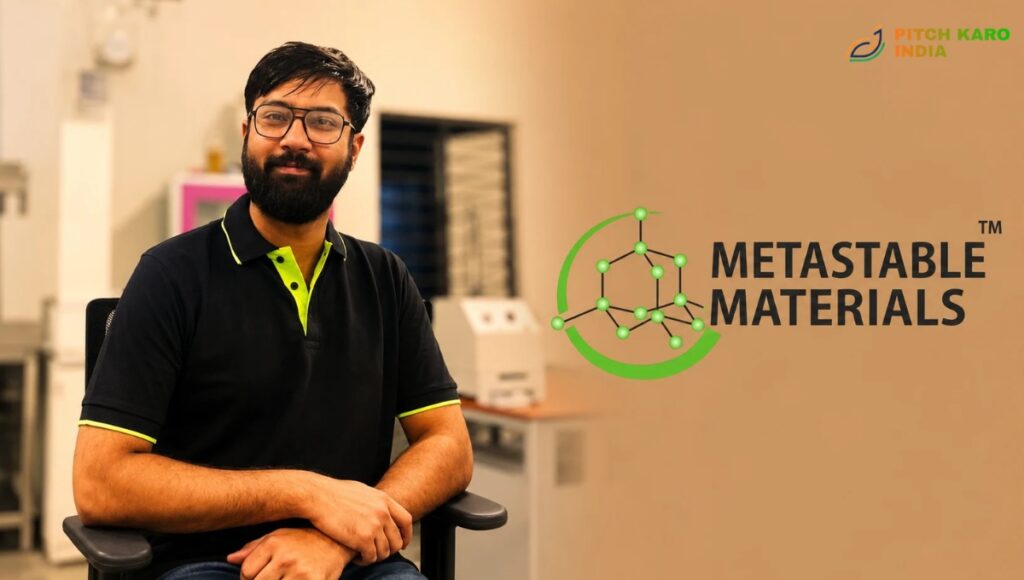
Shubham Vishvakarma is the Co-founder of Metastable Materials and serves as one of the key minds behind the company’s technology, research, and long-term business strategy. He completed his engineering education at the Indian Institute of Technology (IIT) Roorkee, where he developed a strong interest in advanced materials, metallurgy, and battery chemistry. While studying at IIT, he began researching methods to recover valuable metals from used lithium-ion batteries. These experiments eventually laid the foundation for the company that would later become Metastable Materials.
After graduating, Shubham joined the Advanced Materials Division of NBC Bearings, a company under the CK Birla Group. Working in industrial materials gave him practical exposure to manufacturing technologies, metallurgy, and large-scale industrial processes. This experience helped him understand how scientific research could be transformed into commercially viable technology. Rather than following a traditional corporate career, he decided to turn his research into a business capable of solving one of India’s biggest resource challenges.
According to Shubham Vishvakarma, Metastable Materials should not simply be called a battery recycling company. He believes the company is actually a sustainable raw material supplier that happens to recover metals from discarded batteries. His philosophy is based on a simple but powerful belief that spent batteries are not waste but valuable ore that can be refined into industrial metals. This vision has become the driving force behind the company’s rapid growth.
It is important to note that while Shubham Vishvakarma has publicly shared details about his professional journey, education, and startup, information regarding his birthplace, family background, parents, date of birth, personal life, marital status, and other private details has not been publicly disclosed.
Who Is Manikumar Uppala?
Manikumar Uppala is the second Co-founder of Metastable Materials and has played an equally important role in building the company. He completed his studies in Mechanical Engineering and Materials Engineering at IIT Roorkee, where he developed expertise in manufacturing systems, engineering design, and industrial processes. Following graduation, he joined NBC Bearings, where he specialized in Machine Design and Manufacturing. His industrial experience became highly valuable when Metastable Materials began designing and manufacturing its own processing equipment. Today, he contributes significantly to engineering development, plant operations, and manufacturing innovations within the company.
Like his co-founder, Manikumar Uppala has maintained a relatively private personal life. Publicly available information mainly focuses on his education, engineering career, and entrepreneurial achievements rather than his family background or personal life.
Why India Needs Battery Recycling More Than Ever
India is one of the fastest-growing electric vehicle markets in the world. Every year, demand for lithium-ion batteries increases as more electric scooters, cars, buses, energy storage systems, and electronic devices enter the market. However, India imports a significant portion of the critical minerals required for manufacturing these batteries. Lithium, cobalt, and nickel are among the most strategically important metals, and dependence on imports exposes the country to supply chain disruptions and price fluctuations.
At the same time, thousands of tonnes of spent lithium-ion batteries are generated every year across the country. Instead of allowing these valuable materials to become hazardous waste, Metastable Materials believes they should be treated as urban mines. Recovering these metals domestically not only reduces import dependency but also minimises environmental damage caused by mining and improper disposal.
How Metastable Materials Convert Battery Waste into Valuable Metals
The company’s recycling process begins by purchasing spent lithium-ion batteries from various suppliers across India. Once the batteries arrive at the facility, they are carefully dismantled using a unique underwater dismantling process. This method significantly reduces the risk of fire, explosions, and toxic gas emissions that often occur during conventional battery crushing.
The heart of Metastable’s technology is its patented Integrated Carbothermal Reduction (ICR) process. Unlike traditional recycling methods that rely on large amounts of external chemicals, this technology allows the materials already present inside the battery to react with one another. As a result, the company minimises chemical usage while maximising metal recovery.
After the reaction is complete, different metals are separated based on their physical properties. Copper is recovered using pressure-based separation techniques, lithium naturally dissolves in water, while nickel and cobalt are separated through magnetic properties. This efficient process enables the company to produce industrial-grade metals suitable for multiple industries.
Designing Machines Instead of Buying Them
One of the unique aspects of Metastable Materials is that the company designs and builds much of its own industrial equipment. Rather than depending entirely on imported machinery, its engineering team manufactures magnetic separators, density separators, boilers, furnaces, agitators, shredders, grinding mills, and several other specialised machines required for metal recovery. Developing equipment in-house allows the company to customise every stage of the refining process while reducing long-term manufacturing costs.
Building a Sustainable Refinery
View this post on Instagram
Environmental sustainability remains at the core of Metastable’s operations. The company has developed one of India’s most compact Zero Liquid Discharge (ZLD) systems, ensuring that wastewater generated during processing is treated and reused within the facility rather than being discharged into the environment. This significantly reduces water consumption and makes the refining process much more environmentally responsible.
The Metals Produced by Metastable Materials
The company recovers several high-value industrial metals from spent lithium-ion batteries. Lithium is supplied to manufacturers producing glass, ceramics, industrial grease, and speciality cement. Nickel is primarily sold to stainless-steel manufacturers, which remain the largest consumers of the metal globally. Cobalt is used in pigment manufacturing, industrial magnets, and advanced material applications. Copper is supplied to electrical industries, casting companies, and manufacturers of bus bars, while aluminium is widely used in automotive casting. Because the company produces refined commodity metals instead of battery-specific intermediates, its customer base extends well beyond the battery industry.
Where the Company Sources Used Batteries
Metastable Materials procures spent lithium-ion batteries from a wide range of suppliers across India. These include local scrap dealers, battery collection partners, electric two-wheeler manufacturers, electric four-wheeler OEMs, industrial battery suppliers, and various recycling partners. The company also works closely with logistics providers to ensure batteries are transported safely while complying with industry regulations.
Business Model and Revenue Generation
The company’s business model is straightforward yet highly effective. It purchases discarded lithium-ion batteries at market prices, extracts valuable metals using its patented technology, and sells those refined metals based on international commodity benchmarks such as the London Metal Exchange (LME), Shanghai Metal Exchange (SHFE), MCX India, and the Bombay Metal Exchange. Final pricing depends on purity levels, customer requirements, product volumes, and long-term business relationships. Revenue generation began in 2025 as the company scaled its production capabilities.
Manufacturing Facilities and Production Capacity
Metastable Materials currently operates from one corporate office and two manufacturing facilities. Its primary refinery is located in Bengaluru’s Harohalli Industrial Area, while its second facility is situated in Delhi to remain closer to major battery waste suppliers. The Bengaluru plant currently has an installed processing capacity of approximately 1,500 tonnes of spent batteries per year, and the company aims to operate at nearly 90 per cent capacity in the future. As production continues to increase, the company is actively exploring additional locations, including Rajasthan, for future manufacturing facilities.
Funding Journey and Investor Support
Since its launch, Metastable Materials has completed two investment rounds. In January 2022, the company raised its pre-seed funding from Akshay Singhal and Kartik Hajela, founders of Log9 Materials. In 2023, the startup secured seed funding from Surge, the startup accelerator backed by Peak XV Partners (formerly Sequoia India & SEA), along with investments from Speciale Invest, Theia Ventures, and Climate9ers. Although the exact investment amounts have not been disclosed publicly, the funding enabled the company to build manufacturing plants, file patents, strengthen research capabilities, and expand its workforce to more than fifty employees.
Competition and Market Opportunity
The global battery recycling market is expanding at an extraordinary pace due to increasing electric vehicle adoption and growing environmental awareness. Industry reports estimate that the global battery recycling market, valued at approximately USD 18 billion in 2025, could reach nearly USD 32.9 billion by 2034. Within India, Metastable Materials competes with established companies including Attero Recycling, Lohum, BatX Energies, and Tata Chemicals. However, the company’s patented refining technology and focus on producing industrial-grade commodity metals provide a unique competitive advantage.
Future Expansion Plans
The company’s biggest focus for 2026 is expansion. Having successfully demonstrated its technology on a commercial scale, Metastable Materials now plans to build additional manufacturing plants, increase production capacity, file more international patents, and strengthen India’s domestic supply of critical minerals. The founders believe battery waste will become one of the country’s most valuable sources of industrial metals in the coming years. With rising demand for electric vehicles and renewable energy storage, their vision has the potential to reshape India’s circular economy while reducing dependence on imported raw materials.