Octobotics Tech: How An Indian Robotics Startup Is Making Industrial Inspections Safer With AI
Octobotics Tech: Imagine being asked to inspect a massive oil and gas facility, the inside of a large ship, or critical power infrastructure where one wrong step could lead to a serious accident. Industrial inspection is not glamorous work, but it is one of the most important jobs behind the smooth functioning of modern infrastructure. Engineers and technicians regularly have to look for corrosion, cracks, structural damage, wear and other problems that could eventually turn into expensive or dangerous failures. The challenge is that many of these places are difficult to access and can expose workers to considerable risks. This is where robotics and artificial intelligence are opening a new door, and one Indian startup is working to make that possibility a reality.
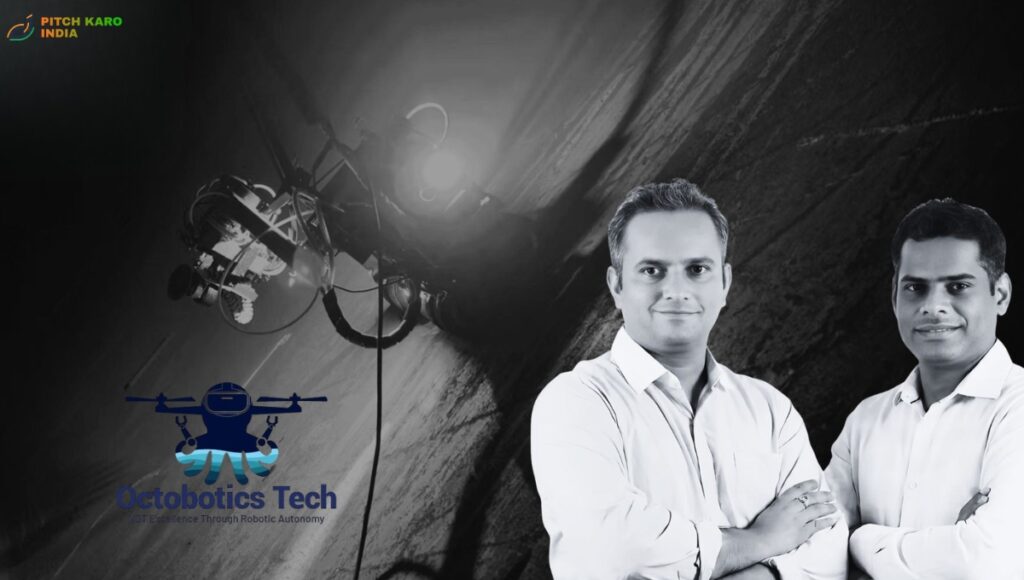
Founded in 2020 by Gulshan Kumar and Ishan Bhatnagar, Octobotics Tech is a Noida-based technology company focused on AI-enabled robotic inspection platforms for non-destructive testing, commonly known as NDT. The company is working particularly with asset-intensive and hazardous industries where inspection is necessary but sending people into difficult environments can be risky. Its work brings together robotics, artificial intelligence, computer vision, engineering and industrial inspection in an attempt to create safer and more intelligent ways of examining critical infrastructure.
The idea behind Octobotics is straightforward but powerful. Instead of always asking a human inspector to physically enter a dangerous or difficult location, a robotic system can potentially perform some of the inspection work while collecting detailed information about the condition of the asset. That information can then be analysed with the help of modern software and AI technologies. The goal is not simply to replace human workers with machines. Rather, it is to give engineers better tools, reduce unnecessary exposure to hazards and make inspection processes more efficient and data-driven.
The Story Behind Octobotics Tech
Octobotics Tech was founded in 2020 by Gulshan Kumar and Ishan Bhatnagar with a focus on solving a very real industrial problem. Large companies depend on enormous physical assets, but keeping those assets safe requires continuous monitoring and inspection. Oil and gas companies operate pipelines, storage tanks, refineries and offshore facilities. Maritime companies operate ships and other complex infrastructure. The power sector depends on equipment and facilities that need to remain reliable because even a small failure can sometimes create widespread consequences.
Traditional inspection methods often require trained professionals to reach difficult locations, operate specialised equipment and manually collect information. In some environments, this can involve working at height, inside confined spaces, near heavy machinery or in other potentially hazardous conditions. Even when the work is performed safely, it can require considerable time, planning and resources.
Robotics offers another approach. A machine can potentially enter or operate in places that are uncomfortable or dangerous for people. When combined with cameras, sensors and inspection technologies, a robotic system can collect information while allowing the human operator or engineer to remain in a safer location. This is the problem that Octobotics is attempting to address through its technology.
What Does Octobotics Tech Actually Do?
At its core, Octobotics Tech is developing AI-enabled robotic inspection platforms for non-destructive testing. Non-destructive testing refers to a range of techniques that allow engineers to examine materials, structures and components without damaging or destroying them. This is particularly important in industries where equipment is expensive, difficult to replace or essential to daily operations.
Consider a large industrial tank, pipeline, ship or power facility. Engineers need to know whether the structure remains safe and reliable, but physically damaging the asset just to inspect it would obviously defeat the purpose. NDT techniques allow professionals to examine the condition of an asset while keeping it intact. Depending on the application, inspections can involve visual imaging, ultrasonic testing, thickness measurements, sensors and other specialised forms of analysis.
Octobotics is attempting to bring these inspection capabilities together with robotics and artificial intelligence. Instead of viewing a robot simply as a machine that moves around, the company’s approach treats it as part of an intelligent inspection system. The robot can potentially access difficult areas, collect information and support the inspection process, while AI and other technologies can assist with analysing the resulting data.
Why Industrial Inspection Needs a New Approach
Industrial infrastructure is enormous and often extremely complex. A single oil and gas facility can contain kilometres of pipelines, large storage tanks, processing equipment and offshore structures. Ships contain confined spaces, hulls, tanks and other areas that require regular examination. Power facilities contain equipment that must be monitored because unexpected failures can be costly and disruptive.
The sheer scale of these assets makes inspection difficult. Engineers have to cover large areas while maintaining accuracy and safety. Accessibility creates another challenge because some components may be located high above the ground, inside confined spaces, underwater or in environments where human movement is restricted.
Robotics can potentially change this equation by allowing machines to carry out certain inspection activities in locations where sending humans would be difficult or unnecessarily risky. However, the role of human expertise does not disappear. Engineers still need to interpret findings, understand the condition of an asset and decide what action should be taken. The robot becomes a tool that extends what humans can safely and efficiently accomplish.
How Robotics Can Make Dangerous Inspections Safer
Worker safety is one of the strongest reasons industries are exploring robotic inspection. Industrial workers can sometimes be exposed to heavy machinery, confined spaces, extreme temperatures, chemicals, heights, water and other hazards. If a robot can perform part of an inspection remotely, the human worker may be able to remain in a safer location while still obtaining the information needed to assess the asset.
This approach creates a relationship between humans and machines rather than simply replacing one with the other. A robot can handle physical access and repetitive data collection, while a trained professional can bring experience, engineering judgement and decision-making to the process. In this model, technology becomes a way of reducing unnecessary risk while strengthening the ability of people to inspect and maintain important infrastructure.
The value of this approach becomes even clearer in industries where a small inspection error or missed defect can have serious consequences. Consistent robotic data collection can potentially provide engineers with additional information that supports more informed maintenance decisions.
The Growing Role of Artificial Intelligence
Robotics solves one part of the inspection problem by helping machines reach difficult locations. Artificial intelligence can help with another important challenge: understanding the enormous amount of information generated during an inspection.
Modern inspection systems can produce large quantities of photographs, measurements and sensor data. When an engineer has to examine thousands of images manually, the process can become time-consuming. AI can potentially assist by processing large datasets and highlighting areas that may deserve closer attention.
Computer vision technology, for example, can potentially be trained to identify visual patterns associated with corrosion, cracks, surface damage or other abnormalities. This does not necessarily mean that AI replaces an engineer. Instead, it can work as an additional analytical layer that helps professionals focus their attention where it may be most useful.
For a company like Octobotics, this combination of robotics and AI is important because the value of an inspection robot does not end when it collects data. The information needs to be understood and turned into something useful for the people responsible for maintaining the asset.
Why Non-Destructive Testing Is So Important
Non-destructive testing has been used by engineers for decades, but robotics is creating new ways to perform and scale these inspections. Traditional NDT processes often require inspectors to physically reach the area being examined. Robotic platforms can potentially carry cameras, sensors and inspection equipment into locations that are difficult for people to access.
Once the information has been collected, it can be processed and presented to engineers in a structured way. This can create a more connected inspection workflow in which data is not simply collected and forgotten after one inspection.
Over time, companies could potentially develop a history of an asset’s condition. Comparing inspection information from different periods can help engineers understand how a structure is changing. This historical perspective can become particularly valuable when companies are trying to identify problems before they become major failures.
The Oil and Gas Industry Opportunity
Oil and gas is one of the industries where robotic inspection has significant potential. The sector operates some of the world’s largest and most complicated industrial assets, including pipelines, storage tanks, refineries, offshore platforms and processing facilities.
Many of these environments can be challenging for human inspectors. Corrosion, structural degradation, leaks and equipment failures can create serious operational, financial and environmental consequences, making regular inspection essential.
Robotic systems could potentially allow companies to examine selected areas while reducing the need for workers to physically enter hazardous locations. However, industrial environments are demanding, which means robotics technology needs to demonstrate reliability outside controlled laboratory conditions. A system has to function in the heat, dust, moisture, confined spaces and unpredictable conditions that can exist at real industrial sites. This makes field testing, engineering expertise and dependable technology especially important for a company operating in this sector.
Maritime Inspection and the Challenge of Ships
The maritime industry provides another important application for robotic inspection. Ships contain numerous areas that can be difficult or dangerous for humans to access. Hulls, tanks, confined spaces and underwater structures can require specialised inspection procedures. Robotics can potentially help operators gather information from these areas while reducing the need to send workers into every difficult environment. For shipping companies, the potential benefits are not limited to safety.
View this post on Instagram
Faster and more consistent inspection processes could also support maintenance planning and potentially reduce the time a vessel needs to remain unavailable for normal operations. When a large ship is taken out of service for inspection or repair, the financial impact can be significant. Technology that helps operators understand the condition of a vessel more efficiently could therefore have meaningful commercial value alongside its safety benefits.
Power Infrastructure Needs Constant Attention
The power sector is another area where inspection technology can make a meaningful difference. Electricity infrastructure needs to operate reliably because failures can affect large numbers of people and businesses.
Power generation facilities and other industrial assets contain equipment that requires regular inspection and maintenance. Robotic systems could potentially help engineers identify problems earlier and monitor asset conditions more consistently.
Early detection is valuable because a small issue discovered during a routine inspection may be easier and less expensive to address than a major failure that occurs unexpectedly. This is part of a broader movement toward predictive and proactive maintenance, where companies use data to understand how their assets are changing instead of simply waiting for equipment to fail.
The Noida Startup Behind the Technology
Octobotics Tech is headquartered in Noida, Uttar Pradesh, placing the company within one of India’s growing technology and business ecosystems. Noida has developed into an important centre for technology, engineering, manufacturing and emerging businesses, giving companies access to technical talent and broader business networks.
However, building an industrial robotics company is very different from developing a software-only startup. Robotics requires hardware development, prototyping, testing, manufacturing, integration, field deployment and maintenance. A robot that performs perfectly during a demonstration can face completely different challenges when placed inside an operating industrial facility.
Dust, heat, water, uneven surfaces, confined spaces and other unpredictable conditions can affect hardware and sensors. This means that successful industrial robotics companies need strong engineering capabilities and extensive real-world testing.
Gulshan Kumar and Ishan Bhatnagar: The Founders
Gulshan Kumar and Ishan Bhatnagar co-founded Octobotics Tech in 2020. Their decision to build a company around industrial robotics reflects the growing interest among Indian entrepreneurs in deep-tech industries.
For founders working with robotics, the challenge is often more complex than building a purely digital product. Hardware development requires research, design, prototyping, testing and manufacturing, all of which can require substantial resources. At the same time, the technology needs to solve a real problem well enough that industrial customers are willing to adopt it.
Octobotics has chosen a specific problem with a clear industrial need. Rather than developing robotics technology simply because the technology itself is exciting, the company is applying robotics and AI to inspection environments where automation could potentially improve safety and operational efficiency.
From Robots to Inspection Intelligence
The larger opportunity for Octobotics may extend beyond the physical robots themselves. The real value could eventually come from creating an entire inspection ecosystem in which robotics, sensors, AI and data work together.
Imagine a robotic system entering an industrial facility, capturing images and measurements, sending that information to a central platform and using AI-assisted tools to highlight possible problems. Engineers could then review those findings, compare them with earlier inspections and decide what needs attention.
Over time, this could create a digital history of an asset’s condition. The robot would no longer be simply a machine moving around a facility. It would become part of a larger information system designed to help engineers understand how infrastructure changes throughout its operational life.
This shift from physical robotics toward data-driven inspection intelligence could become one of the most important aspects of the company’s long-term opportunity.
The Business Case for Robotic Inspection
Safety is an obvious reason for companies to explore robotic inspection, but economics also matter. Industrial downtime can be extremely expensive, particularly when large facilities or vessels are taken offline for inspection or repairs.
If robotic technology can help companies complete certain inspection activities more efficiently, there could be potential benefits in terms of time and operational continuity. Robots can also potentially repeat specific tasks consistently, helping create more standardised inspection data.
There is another potential benefit in the form of predictive maintenance. If companies regularly collect inspection data, they may be able to identify changes before they develop into major problems. Instead of asking why a piece of equipment failed, engineers can increasingly use historical information to understand how that equipment has been changing.
This is where AI-enabled inspection could become particularly useful. The combination of repeated data collection and automated analysis could give maintenance teams a more detailed picture of asset health.
Octobotics and India’s Deep-Tech Revolution
India’s startup ecosystem has traditionally been associated with software, internet businesses and digital services, but that picture is changing rapidly. Indian entrepreneurs are increasingly building companies in robotics, artificial intelligence, drones, space technology, advanced manufacturing and other deep-tech sectors.
Octobotics represents this emerging generation of Indian companies. Its work demonstrates how Indian startups can address sophisticated hardware and industrial problems that are relevant not only to India but potentially to international markets as well.
The future of technology will not be built entirely through software. The physical world still requires machines capable of interacting with factories, ships, power plants, pipelines, warehouses and other infrastructure.
Robotics provides a bridge between digital intelligence and physical environments. Companies like Octobotics are exploring how that bridge can be used to solve problems that have existed for decades.
The Challenges Ahead
The opportunity in industrial robotics is significant, but building a successful business in this field is far from easy. Customers in industries such as oil and gas and power cannot afford unreliable equipment, especially when that equipment is being used to inspect critical infrastructure.
Robotic inspection systems need to work consistently in demanding environments. They may also face regulatory, certification, cybersecurity, integration and safety requirements. Industrial customers often have long procurement and testing cycles, meaning startups may need to spend considerable time proving that their systems can deliver reliable results.
Scaling is another major challenge. Developing one successful robotic system is very different from deploying hundreds of systems across multiple customers and geographical locations. A company needs manufacturing capabilities, technical support, maintenance infrastructure, software systems and strong customer service to support large-scale adoption.
For Octobotics, successfully moving from technology development into broader industrial deployment will therefore be an important part of its long-term journey.
Why the Octobotics Story Matters
The story of Octobotics is interesting because it focuses on a problem most people rarely notice. We see ships, power plants, pipelines and refineries as enormous pieces of infrastructure, but we rarely think about the continuous inspection and maintenance required to keep them safe.
Behind these facilities are engineers and technicians who spend countless hours checking equipment for signs of damage and deterioration. Their work is essential, but some of it can also be physically demanding and risky.
Robotics has the potential to make certain parts of this work safer and more efficient, while AI can potentially help engineers process the growing amount of information generated during inspections.
Together, these technologies could create a new approach to industrial maintenance in which machines handle more of the dangerous or repetitive physical work while people remain responsible for judgement and decision-making.
That makes Octobotics more than simply a robotics company. Its work forms part of a broader movement toward intelligent infrastructure, where physical assets are continuously monitored and their condition is increasingly understood through data.
The Road Ahead for Octobotics Tech
Since its founding in 2020, Octobotics Tech has focused on combining robotics, artificial intelligence and non-destructive testing for asset-intensive industries. Its Noida base places it within India’s growing technology ecosystem, while its focus on industries such as oil and gas, maritime and power gives the company access to markets where inspection is an essential part of operations.
If the company continues improving its robotic platforms, AI capabilities, inspection accuracy and industrial deployment, it could become part of a broader transformation in the way critical infrastructure is maintained.
The future may see robots carrying out more routine inspection activities while engineers spend more time interpreting results and making high-value decisions. This does not necessarily mean humans disappear from industrial inspection. Instead, their role could evolve.
A technician who once had to physically enter a hazardous environment could potentially operate a robotic system from a safer location. An engineer who previously had to manually review thousands of images could receive AI-assisted analysis that highlights areas requiring closer attention. A maintenance team that once reacted to unexpected equipment failures could potentially use historical inspection data to plan interventions earlier.
That is the real promise behind this technology. It is not about replacing human expertise. It is about giving people safer ways to perform difficult work and better information with which to make important decisions.
A Safer Future Through Robots and AI
Octobotics Tech began its journey in 2020 when Gulshan Kumar and Ishan Bhatnagar came together to build a company focused on robotic inspection. Since then, the idea behind the company has become part of a much larger technological shift. Robots are becoming more capable, artificial intelligence is becoming more practical, and sensors are becoming increasingly sophisticated. At the same time, industries are looking for better ways to make difficult tasks safer, faster and more reliable.
For Octobotics, the opportunity lies at the intersection of these developments and some of the world’s most demanding industrial environments. Oil and gas facilities need inspection, ships need inspection, power infrastructure needs inspection, and industrial assets need to be monitored throughout their operational lives. The people responsible for these assets need reliable information to make important decisions, and that is the problem Octobotics is trying to solve.
Ultimately, its story is not really about robots replacing people. It is about using machines to take on some of the dangerous, repetitive and physically demanding aspects of inspection while giving human experts better information to work with. The most useful technology is rarely technology created simply because it is impressive. The most valuable technology is technology that solves a real problem.
By focusing on hazardous inspection environments, Octobotics Tech is attempting to build exactly that kind of solution. From its Noida base, the company represents an emerging generation of Indian deep-tech startups taking robotics beyond demonstrations and toward real industrial applications. The journey is still developing, and there are significant challenges ahead. But if robotic inspection becomes a larger part of industrial operations, companies like Octobotics could play an important role in making the infrastructure around us safer, smarter and easier to maintain.
Sometimes, the most impressive technology is not the machine that makes the most noise. It is the machine quietly doing the dangerous work that people should never have had to do alone.
Disclaimer: This article is intended for general informational and educational purposes only. The information is based on the details provided in the source material. Company leadership, products, technology, operations, partnerships, headquarters and business plans may change over time. The discussion of robotics, artificial intelligence and non-destructive testing describes potential applications and should not be interpreted as a guarantee of performance, safety or commercial success. Readers should verify the latest information through Octobotics Tech’s official channels and other reliable sources before making any business, investment or commercial decision.