Upstox: The Story of An Indian Fintech That Changed The Way People Invest
Upstox: There was a time when investing in the stock market felt like something meant only for experts, experienced traders, and people who understood complicated financial language. For an ordinary person sitting at home, the idea of buying shares could feel confusing, expensive, and even intimidating. Then technology began changing the relationship between people and money.
One of the companies that became part of this transformation in India is Upstox. Today, Upstox is recognised as a major digital investment and trading platform, but its journey did not begin with a massive team or a household-name brand. The company started in 2009 under the name RKSV Securities, founded by Ravi Kumar, Raghu Kumar, and Shrinivas Viswanath. Kavitha Subramanian later joined the founding team, bringing another important dimension to the company’s growth.
The story of Upstox is not simply about an app that allows people to buy and sell financial products. It is also a story about entrepreneurship, technology, changing consumer behaviour, competition, and the growing desire among Indians to take greater control of their financial decisions.
Behind the platform are founders who took different responsibilities and brought different strengths to the business. Ravi Kumar became the company’s Chief Executive Officer, helping guide strategy and day-to-day operations. Raghu Kumar played an important role in establishing the original business before eventually moving on to new ventures. Shrinivas Viswanath focused strongly on technology and product architecture, while Kavitha Subramanian became associated with growth, finance, and customer experience.
Together, their journey helped shape what would become Upstox.
From RKSV Securities to Upstox
The company that people now know as Upstox began its journey in 2009 as RKSV Securities. The timing was important. India’s financial markets were becoming increasingly accessible to retail investors, while technology was beginning to change the way financial services were delivered. However, investing was still viewed by many people as complicated and difficult to understand.
The founders entered this environment with a technology-oriented approach. Instead of relying entirely on traditional ways of providing brokerage and investment services, the company looked toward creating a more modern and accessible experience.
Over time, RKSV Securities evolved and eventually adopted the Upstox brand. The change reflected a broader ambition to create a consumer-focused financial technology platform that could serve a much larger audience.
This transition was more than a change of name. It represented the company’s movement toward becoming a digital-first investment platform at a time when smartphones and internet connectivity were rapidly becoming part of everyday Indian life.
The Founders Behind Upstox
Every successful company has a story behind its name, but the people who build it often tell the more interesting story. Upstox’s founding journey involves Ravi Kumar, Raghu Kumar, Shrinivas Viswanath, and Kavitha Subramanian, with each associated with a different part of the company’s development.
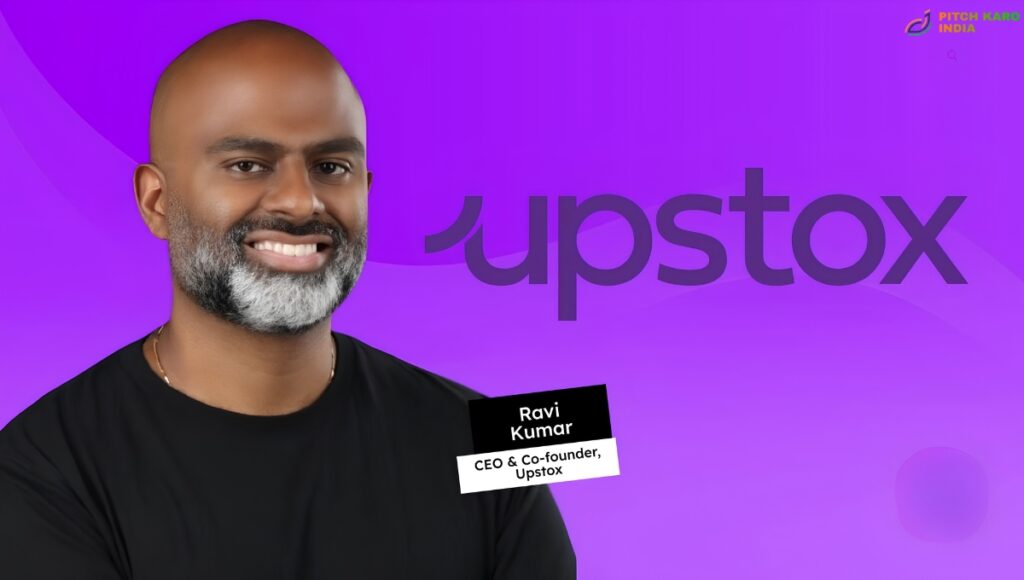
Ravi Kumar has served as Upstox’s co-founder and CEO. His role involves guiding the company’s strategy and overseeing its operations. As the face of the company in several public conversations, he has also spoken about the realities of building a startup, including the difficult moments that founders experience along the way.
The journey of entrepreneurship is rarely a straight road. Startups face uncertainty, competition, financial pressure, changing markets, and the constant need to make decisions without knowing exactly what will happen next. Ravi Kumar’s experiences as a founder provide a glimpse into that side of the Upstox story.
Raghu Kumar was among the founders who helped establish the business. His contribution came during the early stage when the company was still developing its foundation. He later moved on to pursue other ventures, but his role in the company’s beginnings remains an important part of its history.
Shrinivas Viswanath brought strong technical expertise to the founding team. His focus on technology and product architecture was particularly important because Upstox’s business depends heavily on digital infrastructure. When millions of users interact with a financial platform, technology has to do much more than simply look good. It needs to be reliable, responsive, secure, and capable of handling large volumes of activity.
Kavitha Subramanian joined the founding team later and became associated with areas including growth, finance, and customer experience. Her involvement added another important perspective to the business, particularly as Upstox expanded and began serving a much larger customer base. The combination of business strategy, technology, financial thinking, and customer-focused growth helped create the foundation for the company’s development.
Why Technology Became Central to Upstox
The financial services industry has always depended on technology, but the rise of mobile applications transformed the customer experience. Instead of calling a broker or depending heavily on physical paperwork, users could increasingly access financial markets through a smartphone. This change created a huge opportunity.
Upstox built its business around this digital shift. The idea was relatively simple: give users access to financial markets through a technology platform that could be used from almost anywhere.
For a younger generation that had grown up with smartphones, online payments, food delivery applications, and digital banking, investing through an app felt much more natural than traditional brokerage methods.
This helped change the perception of investing. A person could learn about the market, open an account, monitor investments, and place trades through a digital interface. While investing itself still requires knowledge and carries financial risk, the technology surrounding the process became considerably easier to access.
Making Investing Feel More Accessible
One of the biggest changes brought by digital investment platforms has been accessibility. In the past, many people believed that stock-market investing was only for wealthy individuals or professional traders. Digital platforms helped challenge that perception by making market access available through smartphones and the internet.
Upstox became part of this larger movement. Its platform has been designed to give users access to financial markets through a digital interface. The company has focused on creating an experience that can appeal to both active traders and people who are gradually exploring investing.
This does not mean that investing has become simple in the financial sense. Markets can still be unpredictable, and investors can lose money. What technology has changed is the ease with which people can access financial information and investment tools. That distinction is important. Technology can make investing more convenient, but it cannot remove the risks associated with financial markets.
The Rise of India’s Retail Investor
Upstox’s growth has happened alongside a major change in India’s investment culture. More Indians have started showing interest in stocks, mutual funds, exchange-traded funds, and other financial products. The growth of smartphones, affordable internet connectivity, digital identity systems, and online banking has made it easier for individuals to participate in financial markets.
The pandemic period also accelerated digital adoption across many industries. People who had previously depended on physical offices and traditional services became more comfortable handling important activities online. Investment platforms benefited from this broader behavioural change.
For many first-time investors, an app can feel less intimidating than walking into a brokerage office. The ability to explore financial information on a phone can also encourage people to learn at their own pace. Upstox became one of the platforms competing for this growing generation of Indian retail investors.
The Importance of Product Design
Financial technology is not just about numbers and servers. It is also about how users experience the product. A trading platform can have powerful technology behind it, but if users find the interface confusing, they may struggle to use it effectively. This is why product architecture and user experience have been important elements of Upstox’s development.
View this post on Instagram
Shrinivas Viswanath’s technology-focused role within the founding team reflects the importance of building a strong technical foundation. A financial platform needs to deliver information quickly while providing users with tools that are understandable and practical. For a first-time investor, even small design choices can make a difference. Clear navigation, understandable information, easy account management, and accessible tools can reduce the feeling that the stock market is only for experts. The goal is not to make financial markets risk-free. It is to make the technology around them easier to understand and use.
Competition in India’s Fintech Market
Upstox did not grow in an empty market. India’s brokerage and fintech industry has become highly competitive, with several digital-first companies fighting for the attention of retail investors.
This competition has forced platforms to continuously improve their technology, pricing models, customer experience, educational resources, and product offerings. For Upstox, staying competitive has meant continuing to evolve.
Customers today have more choices than ever. They can compare platforms, read online reviews, examine features, and switch providers if they are unhappy with the experience. That puts enormous pressure on fintech companies. A platform cannot simply attract customers once. It has to continue earning their trust.
The Role of Trust in Financial Technology
Trust is perhaps even more important in fintech than in many other technology businesses. When people use a shopping application, they may be concerned about delivery or product quality. When they use a financial platform, they are dealing with their money and investments. That creates a much higher level of responsibility.
For a company such as Upstox, technology, security, customer support, regulatory compliance, and transparency are all critical parts of the customer relationship. A user needs confidence that their information is handled responsibly and that the platform will function when they need it.
This makes building a fintech company very different from building an ordinary consumer application. The founders therefore had to think about more than growth. They had to build an organisation capable of operating in a heavily regulated and highly sensitive financial environment.
The Importance of Ratan Tata’s Association
Upstox also gained significant public attention through its association with veteran Indian industrialist Ratan Tata. Ratan Tata’s investment in Upstox became an important moment for the company, particularly because of his reputation and influence within India’s business ecosystem. His association helped bring additional visibility to the fintech company and its broader mission.
The connection also reflected the growing interest among established investors and business leaders in India’s technology-driven financial services sector. For startups, having respected investors can provide more than capital. It can also strengthen credibility and attract attention from customers, employees, partners, and other investors.
Ravi Kumar’s Journey as a Founder
Behind the success stories of startups, there are usually difficult chapters that people rarely see. Founders are often expected to present confidence even when they are facing uncertainty. They have to make decisions with limited information, manage teams, deal with competition, and constantly think about what comes next.
Ravi Kumar has spoken publicly about the highs and lows of being a founder. These experiences provide a more realistic picture of entrepreneurship. Building Upstox was not simply about creating a trading application. It required years of work, experimentation, adaptation, and persistence.
The company had to survive changing market conditions while technology and customer expectations continued to evolve. That journey is a reminder that startup success rarely happens overnight. What customers eventually see as a polished application is often the result of years of work behind the scenes.
Kavitha Subramanian and the Growth Story
As Upstox expanded, growth and customer experience became increasingly important. Kavitha Subramanian’s role within the founding team has been associated with growth, finance, and customer experience. These areas are essential for a company that wants to move from being a startup to becoming a large consumer-facing financial platform. Growth is not simply about adding more users.
A company has to understand why people join, what they need, what problems they face, and why they continue using the service. Finance is equally important because rapid growth must be supported by a sustainable business model.
Customer experience connects both sides. Even the strongest technology can lose customers if the overall experience becomes frustrating. The balance between these areas is one of the central challenges faced by digital financial companies.
What Upstox Represents for India’s Startup Ecosystem
Upstox’s story represents something larger than the success of one fintech platform. It reflects the changing relationship between technology and financial services in India. Indian consumers are increasingly comfortable managing important parts of their lives through smartphones. Banking, payments, shopping, education, travel, healthcare, and investing have all moved toward digital experiences.
This has created opportunities for entrepreneurs who can identify old problems and solve them using modern technology. Upstox’s journey shows how a company can enter a traditional industry and build a technology-led alternative. It also demonstrates the importance of timing.
The company began in 2009, before India’s current fintech boom had fully taken shape. Over the following years, internet access, smartphones, digital payments, and financial awareness grew rapidly. Upstox was therefore able to develop alongside a changing generation of Indian consumers.
The Road Ahead for Upstox
The future of Upstox will depend on how effectively it continues adapting to a rapidly changing financial technology environment. Customers are becoming more knowledgeable. Competition is becoming stronger. Regulations continue to evolve. Technology is advancing quickly.
Artificial intelligence, data-driven tools, personalised financial experiences, and improved digital education could all influence the future of investment platforms. But technological innovation will have to be accompanied by responsibility.
Financial products affect people’s savings and long-term goals. Making platforms more convenient should therefore go hand in hand with helping users understand risk. The next phase of fintech growth may not simply be about acquiring more users. It may increasingly focus on helping existing users make better-informed financial decisions. That could create an important opportunity for platforms like Upstox.
From a Small Beginning to a Recognised Fintech Brand
The story of Upstox began more than a decade ago with RKSV Securities and a small founding team led by Ravi Kumar, Raghu Kumar, and Shrinivas Viswanath. Kavitha Subramanian later joined the founding group and became associated with growth, finance, and customer experience.
Since then, the company has become part of India’s broader digital investing revolution. Its story is ultimately about accessibility. For many Indians, the stock market once seemed distant and complicated. Digital platforms helped bring it closer to ordinary people.
Upstox has played a role in that transformation by combining financial services with technology and designing an experience that can be accessed through digital devices. But perhaps the most meaningful part of its journey is not the technology itself. It is the change in mindset that technology has helped encourage.
A young professional can now explore investing from a smartphone. A first-time investor can access market information without entering a traditional brokerage office. Someone curious about financial markets can begin learning without feeling completely disconnected from the system. Of course, access does not automatically mean success. Investing still requires patience, knowledge, research, and an understanding of risk. Yet the fact that more people can participate is itself a major shift.
Upstox’s journey from RKSV Securities to a recognised Indian fintech brand captures this change remarkably well. It shows how technology can make traditional financial services more accessible, while also demonstrating how much work is required to build trust in a highly sensitive industry.
The company’s founders brought different strengths to the journey. Ravi Kumar focused on leadership and strategy, Raghu Kumar helped establish the original business, Shrinivas Viswanath contributed heavily to technology and product architecture, and Kavitha Subramanian became associated with growth, finance, and customer experience. Together, their story is a reflection of India’s evolving entrepreneurial landscape.
The next chapter may bring new products, new technologies, and new challenges. Whatever direction the company takes, its journey remains an interesting example of how an Indian startup can use technology to challenge traditional ways of doing business. For the millions of Indians who are becoming more curious about investing, that transformation has already changed the way financial markets are experienced.
Disclaimer: This article is intended solely for general informational and educational purposes. The information presented here is based on the details provided in the source material and publicly available references associated with Upstox and its founders. Company leadership roles, business operations, products, investments, financial performance, ownership details, and plans may change over time. Nothing in this article should be considered financial, investment, legal, or professional advice. Investing and trading in financial markets involve risks, including the possibility of losing money. Readers should conduct their own research and verify the latest information through Upstox’s official website, regulatory sources, and other reliable publications before making any financial decision.