
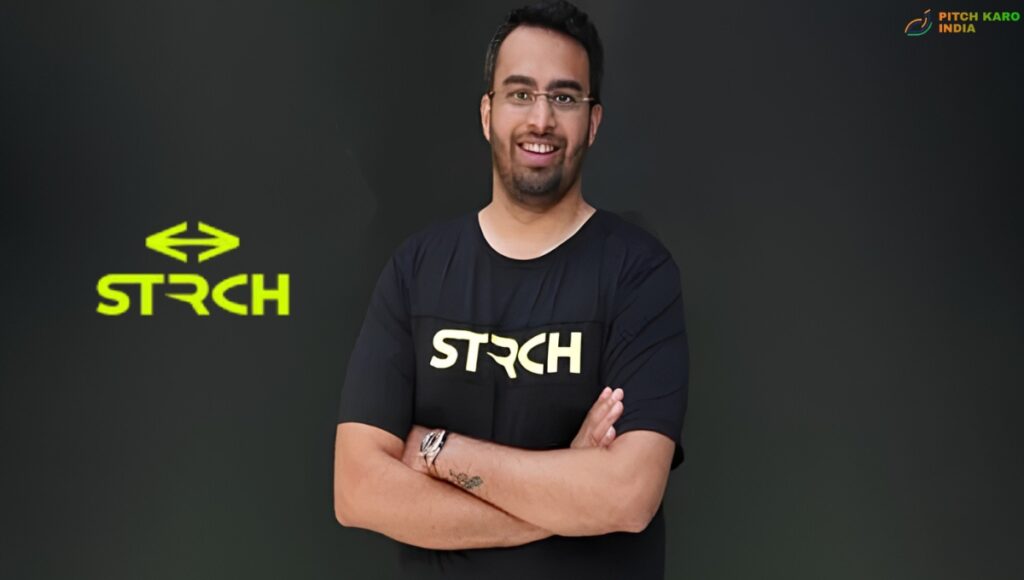
STRCH: The Indian Activewear Brand Redefining Comfort, Performance And Everyday Style
STRCH: There is something special about clothing that makes you feel ready for the day. It could be a workout in the morning, a quick coffee run, a long day at work, or simply a relaxed evening with friends. Modern consumers no longer want separate clothes for every part of their lives. They want outfits that can move with them, feel comfortable for hours, and still look good.
This changing lifestyle is creating exciting opportunities in India’s activewear market, and STRCH is one of the young Indian brands trying to make its mark.
Founded by Prithvi Bhagat, STRCH entered the Indian market with a clear idea: activewear should not be limited to gyms and professional athletes. It should fit naturally into everyday life. The brand was launched in late 2023 with an ambition to create versatile, high-performance, and comfortable activewear designed around Indian consumers, their lifestyles, and the country’s unique climate.
Behind STRCH is a founder with a strong connection to the textile industry. Prithvi Bhagat comes from the Gulabdas Group, a textile-focused family business with a long entrepreneurial history. As a fourth-generation entrepreneur, Bhagat grew up around the world of textiles and business, giving him a different perspective on how clothing is made, marketed, and experienced by consumers.
But STRCH is not simply an extension of a traditional textile legacy. It represents an attempt to bring that experience into a new generation of fashion, where comfort, performance, technology, and everyday style are becoming increasingly connected.
The Story Behind STRCH
STRCH’s story begins with a simple observation about how people live today. The boundaries between exercise, work, travel, and casual life are becoming increasingly blurred. A person might attend a workout session in the morning, head to a café afterwards, spend several hours working, and meet friends in the evening. Changing clothes multiple times is not always practical.
This has created demand for clothing that can perform across different situations. Traditional sportswear may be designed primarily for exercise, while ordinary casual clothing may not offer the flexibility, breathability, stretch, and moisture management that active lifestyles require. STRCH was created to sit between these worlds.
The brand’s vision is centred on activewear that can handle movement without sacrificing comfort or appearance. Rather than treating activewear as clothing reserved for the gym, STRCH aims to make it part of everyday wardrobes.
That idea may sound simple, but it reflects a major shift in consumer behaviour. People are increasingly looking for products that give them more value from a single purchase. Instead of buying something that works for only one occasion, consumers want clothing that can adapt to different parts of their day.
Prithvi Bhagat: The Founder Behind the Brand
At the heart of STRCH is Prithvi Bhagat, a fourth-generation entrepreneur from the Gulabdas Group. Coming from a family with deep roots in textiles gave Bhagat an early connection to the industry. However, building a modern activewear brand requires more than understanding fabric and manufacturing. It requires an understanding of consumers, fashion, business, technology, and changing lifestyles.
Bhagat studied business at WeSchool and the London School of Economics, giving him exposure to both Indian and international approaches to business and management. That combination of family experience and formal business education became an important part of the foundation behind STRCH.
For a young entrepreneur, entering a competitive fashion market can be challenging. Indian consumers have access to both domestic and international sportswear brands, while digital-first companies are constantly introducing new products and designs. STRCH therefore entered a market where customers already had plenty of choices. The brand’s opportunity was to understand what those consumers still wanted but were not getting easily.
Why India Needed a Different Kind of Activewear
India is a country with extremely diverse weather conditions and lifestyles. From humid coastal cities to hot inland regions and cooler northern areas, people experience very different climates throughout the year. This matters when it comes to clothing. Activewear designed for one environment may not necessarily feel ideal in another.
Sweat, heat, humidity, long commutes, crowded urban environments, and extended periods of movement can all influence how clothing feels throughout the day. STRCH was created with this reality in mind. The brand identified an opportunity to create activewear suited to Indian conditions rather than simply copying international approaches.
This local perspective is important because good clothing is not only about appearance. It is also about how the material behaves when someone actually wears it. A fabric can look impressive in a photograph, but the real test comes after several hours of movement, heat, and daily activity. STRCH’s proposition is built around solving that everyday problem.
Activewear That Goes Beyond the Gym
One of the most interesting aspects of STRCH’s positioning is its focus on versatility. For years, the word “activewear” immediately brought images of gyms, running tracks, athletes, and fitness enthusiasts to mind. That is changing.
Today, activewear has become part of mainstream fashion. Joggers, performance T-shirts, stretch trousers, shorts, sweatshirts, and other athletic-inspired clothing can be seen far beyond fitness centres. People wear them while travelling, shopping, working from cafés, running errands, or simply relaxing at home.
STRCH is building its identity around this broader definition of activewear. The idea is not necessarily to make consumers choose between looking stylish and feeling comfortable. Instead, the brand aims to combine the two. This makes the clothing more useful because consumers can wear the same product across different parts of their day.
The Importance of Comfort
Comfort may sound like a basic requirement, but in activewear it is everything. When someone exercises, walks for a long time, travels, or spends hours sitting and moving around, uncomfortable clothing can quickly become irritating.
Fabric that does not stretch properly can restrict movement. Poor breathability can make hot weather even more uncomfortable. Heavy materials can feel unpleasant during physical activity. This is why modern activewear brands focus heavily on fabric technology and construction.
STRCH’s focus on performance and comfort reflects this reality. The goal is to create clothing that feels natural when the body moves. Instead of constantly adjusting the outfit, the wearer should be able to focus on whatever they are doing. That sounds like a small thing, but it can make a major difference in everyday life.
Performance Meets Everyday Fashion
The rise of athleisure has changed the fashion industry. Consumers no longer necessarily separate their wardrobes into formal clothing, casual clothing, and sportswear as strictly as previous generations did.
A pair of well-designed performance trousers can be worn for a workout and then paired with a casual top for an informal outing. A technical T-shirt can work just as well during a morning run as it can during a relaxed day outside. This flexibility is one reason activewear has become such an attractive category.
STRCH is positioned within this larger movement. The brand’s approach combines performance-focused features with designs intended for everyday use. That gives it an opportunity to appeal not only to dedicated fitness enthusiasts but also to people who simply want clothing that is comfortable and practical.
A New Generation of Indian Consumers
India’s younger consumers are changing the way they think about fashion. For many of them, clothing is no longer only about looking fashionable. It is also about identity, comfort, lifestyle, health, and convenience. Fitness culture has expanded significantly across Indian cities. Running clubs, gyms, yoga studios, sports communities, cycling groups, and home workouts have all become more visible.
At the same time, social media has made fitness and fashion more closely connected. People see athletes, creators, trainers, and everyday fitness enthusiasts wearing performance clothing and often want similar products for their own lifestyles.
This has created a strong opportunity for Indian activewear brands. STRCH is entering this environment with a proposition that feels particularly relevant to modern urban life: clothing that can keep up with the wearer rather than forcing the wearer to adapt to the clothing.
The Advantage of a Textile Heritage
STRCH’s connection to the Gulabdas Group gives the brand an interesting foundation. The textile industry is complex. It involves raw materials, fabrics, manufacturing processes, quality control, supply chains, and an understanding of how materials behave.
A founder coming from a textile family may have a deeper appreciation for these details than someone entering fashion with no prior connection to the industry. However, heritage alone does not guarantee success. Modern consumers are demanding. They care about design, quality, price, brand identity, sustainability, convenience, and online experience.
STRCH therefore has to combine its traditional textile understanding with the expectations of a digital-first generation. That balance could become one of its strongest advantages if executed successfully.
Why the STRCH Launch Matters
STRCH launched in late 2023, entering the market at a time when India’s premium and performance-focused apparel categories were becoming increasingly competitive. Launching a new clothing brand is never easy. There are established international names with large marketing budgets, Indian companies with decades of experience, and a growing number of direct-to-consumer startups competing for consumer attention. A new brand therefore needs a reason for people to care.
View this post on Instagram
STRCH’s answer is its focus on Indian consumers and their real lifestyles. Rather than simply presenting activewear as fashionable sports clothing, the brand is attempting to address the practical requirements of people who want flexibility, comfort, performance, and everyday usability.
Building a Brand in the Digital Age
The way fashion brands are built has changed dramatically. A company no longer needs hundreds of physical stores before people can discover it. Social media, e-commerce, influencers, digital advertising, and online communities allow young brands to reach customers directly. This has created a new path for entrepreneurs.
A strong product can now be introduced to consumers through digital platforms, tested through customer feedback, and improved based on what people actually want. For STRCH, this environment creates both opportunities and challenges. The opportunity is clear: the brand can build a direct relationship with consumers.
The challenge is equally clear: customers have very little patience for brands that fail to deliver. Online shoppers can compare products instantly. They can read reviews, check competitors, examine photographs, and make decisions within minutes. This makes product quality and customer experience more important than ever.
Understanding the Indian Climate
One of STRCH’s most relevant ideas is its focus on clothing suited to Indian climates. India’s weather can be demanding for activewear. Heat and humidity can make physical activity uncomfortable, while sudden weather changes can create additional challenges. Performance clothing therefore needs to do more than simply look athletic.
Breathability, flexibility, moisture management, lightweight construction, and comfort can become important factors in determining whether a consumer actually enjoys wearing the product. Designing with local conditions in mind allows Indian brands to create products that may feel more relevant to domestic consumers.
This is where STRCH’s positioning becomes particularly interesting. Rather than asking Indian customers to adjust to products designed primarily for other markets, the brand is attempting to build around the experiences of Indian consumers.
The Emotional Side of Comfortable Clothing
Clothing is often discussed in terms of fabric, price, design, and technology. But there is also an emotional side to what people wear. When clothing feels good, people often feel more confident.
When a pair of trousers moves comfortably during a workout, a person can concentrate better on the exercise. When a T-shirt remains comfortable during a long day, the wearer does not have to think about it. That freedom is one of the hidden values of good activewear.
The best clothing often disappears into the background. You stop noticing it because it is simply doing its job. STRCH’s emphasis on comfort and versatility is connected to this idea. The brand wants its products to support the consumer’s lifestyle rather than dominate it.
The Bigger Opportunity in India’s Activewear Market
India’s activewear market has significant potential because the country’s relationship with fitness and casual fashion continues to evolve. Fitness is becoming more mainstream. People are becoming more aware of health and physical activity. At the same time, younger consumers are increasingly comfortable wearing casual and athletic-inspired clothing outside traditional sports settings.
This creates a large space between performance sportswear and ordinary casual clothing. Brands that can successfully occupy this space may be able to build strong relationships with consumers.
STRCH is attempting to do exactly that. Its opportunity is not limited to professional athletes. The much larger audience is made up of ordinary people who want to move more, feel comfortable, and look good while doing it.
The Challenges Ahead
Despite the opportunity, STRCH’s journey will not be without challenges. The activewear market is crowded, and consumers have many alternatives. A young brand must continuously prove that its products offer genuine value. It needs to maintain consistent quality while managing costs. It must create a distinctive identity that people remember. It also needs to earn customer trust over time.
Then there is the challenge of scaling. As a brand grows, maintaining product quality across larger volumes can become difficult. Supply chains become more complicated, customer expectations increase, and competition becomes stronger.
STRCH’s textile heritage could help with some of these challenges, but the company will still need to demonstrate that it can combine heritage with modern execution.
The Road Ahead for STRCH
The future of STRCH will depend on how successfully it can translate its founding vision into a lasting consumer brand. Its beginning is certainly interesting.
Prithvi Bhagat brings the perspective of a fourth-generation entrepreneur from a textile family, combined with business education from WeSchool and the London School of Economics. The company has entered a growing market with a clear focus on versatility, performance, comfort, and Indian lifestyles. The next challenge is building a strong emotional connection with consumers.
People rarely become loyal to clothing brands simply because the fabric is technically impressive. They become loyal because the product fits their lives, the design reflects their personality, and the overall experience feels worth returning to. If STRCH can achieve that balance, it has the potential to become more than another activewear label. It could become a recognisable Indian brand that represents a new way of thinking about everyday clothing.
From Textile Legacy to Modern Activewear
STRCH’s story is still young. Launched in late 2023, the brand has only recently begun its journey in India’s rapidly evolving activewear market. Yet its foundation makes the story worth following. At the centre is Prithvi Bhagat, a fourth-generation entrepreneur who grew up with a connection to the textile industry and later studied business at WeSchool and the London School of Economics.
His decision to create STRCH reflects a simple but meaningful belief: modern Indian consumers deserve activewear that understands how they actually live. People want clothes that move with them. They want comfort during long days, performance during workouts, and designs that can transition naturally into everyday life.
That is the space STRCH is trying to occupy. The brand’s journey also represents something larger happening in Indian fashion. The country’s entrepreneurs are increasingly taking traditional industries and looking at them through a modern lens.
Textiles are no longer only about manufacturing fabric. They can become the foundation for technology-led clothing, performance apparel, lifestyle brands, and new consumer experiences. STRCH sits at that intersection. Its story is a reminder that sometimes the best business ideas come from noticing a gap in something we already use every day.
Activewear does not need to be restricted to athletes. Comfort does not have to come at the cost of style. Performance clothing does not have to feel disconnected from everyday life. If STRCH continues to build on these ideas, its journey could become an interesting chapter in India’s growing homegrown fashion and consumer-brand ecosystem.
For now, it remains a young brand with a clear ambition: to make activewear feel more natural, more versatile, and more relevant to the Indian way of life. And perhaps that is where its biggest opportunity lies. Not in simply selling more clothes, but in changing how people think about the clothes they wear every day.
Disclaimer: This article is intended for informational and educational purposes only. The information has been prepared using the details provided in the source material and publicly available information about STRCH and its founder. Company information, products, business strategies, leadership details, and plans may change over time. The article should not be considered financial, investment, business, fashion, or professional advice. Readers are encouraged to verify the latest information through STRCH’s official website and other reliable sources before making any business or purchasing decision.