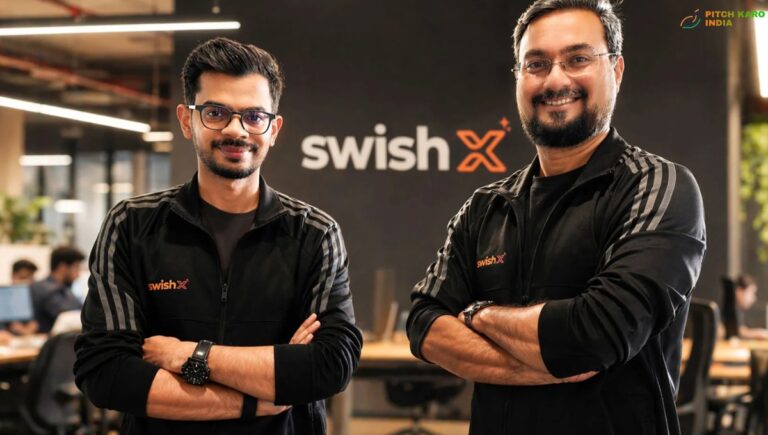

“We Are the Tesla of Credit Cards”: The Inspiring Story of Rajan Bajaj And Slice
Slice: Every successful startup has a story behind it, but some stories stand out because they begin with a simple question: why can’t this experience be better? For Rajan Bajaj, founder and CEO of Slice, that question became the starting point of a much bigger journey. What began as an attempt to rethink the way young Indians use credit and digital payments eventually grew into one of India’s most talked-about fintech stories. Rajan Bajaj’s journey is not simply about creating a financial technology company. It is about understanding how a generation thinks about money, payments, credit, and convenience, and then trying to build financial products around those changing expectations.
Rajan Bajaj, an alumnus of IIT Kharagpur, entered the startup world with an interest in solving everyday problems through technology. Before building Slice, he had already experimented with entrepreneurship through a rental-focused application called Mesh Internet. That experience gave him an early opportunity to understand what it takes to turn an idea into a product and, more importantly, what it means to build something for real users. In January 2016, he founded what would eventually become Slice, beginning a journey that would take him from the world of consumer fintech to the highly regulated world of banking.
At the heart of Rajan’s approach was the belief that financial products could be designed in a way that felt more natural to modern consumers. For years, credit cards had carried an image of complicated terms, traditional banking processes, and experiences that were not necessarily designed around younger customers. Rajan saw an opportunity to approach the category differently. Rather than simply creating another financial product, the ambition was to build a consumer-focused experience where technology, simplicity, and convenience could play a much bigger role.
The phrase “We are the Tesla of credit cards” captures the kind of ambition associated with this approach. The comparison was not simply about creating another credit card. It reflected a desire to challenge an established category and rethink how customers interact with financial services. Just as technology companies have transformed industries that once seemed difficult to change, Rajan wanted Slice to bring a similar sense of modern thinking to credit and payments.
The Problem Rajan Bajaj Wanted to Solve
Money is deeply personal. People earn it, spend it, save it, borrow it, and make important life decisions around it. Yet financial products can often feel distant from the everyday experiences of consumers. Traditional systems were built over decades, and while they provide important financial infrastructure, the customer experience does not always evolve at the same speed as technology.
For younger consumers who had grown up using smartphones, instant payments, food delivery applications, online shopping, and digital entertainment, expectations were changing. People became comfortable with services that were quick, simple, and available at their fingertips. Financial services were naturally expected to move in the same direction.
This environment created an opportunity for fintech founders like Rajan Bajaj.
Instead of asking how to make an existing financial product slightly better, the larger question was how technology could completely change the way consumers experience credit and payments. That mindset helped shape Slice during its early years.
The company focused heavily on making financial services feel more accessible and technology-driven. Rather than relying only on the traditional banking experience, Slice built its identity around a digital-first approach that appealed strongly to consumers who were comfortable managing their financial lives through their phones.
The journey was not about removing the seriousness of financial responsibility. Credit still comes with obligations, and financial products require careful use. But the experience surrounding those products could be made easier to understand and more convenient. That difference became an important part of Slice’s identity.
From Startup Experiment to a Bigger Financial Vision
When Rajan started Slice in 2016, the Indian fintech ecosystem was still developing rapidly. Digital payments were becoming increasingly popular, smartphones were spreading across the country, and a new generation of consumers was becoming more comfortable with digital financial services.
The timing created an environment where a technology-led financial company could experiment with new ways of serving consumers.
Slice began as a consumer-focused fintech venture and gradually developed its presence in the credit and payments space. Its growth reflected a broader transformation taking place in India, where technology companies were increasingly becoming part of everyday financial life.
For Rajan, however, building a company in financial services was never going to be as simple as creating an ordinary consumer application. Finance is closely connected with trust, regulation, security, risk management, and responsible lending. As the company grew, the ambitions also became bigger, and the journey eventually moved beyond simply offering a technology layer around financial products. That transition would become one of the most significant chapters in the company’s story.
Why Becoming a Bank Was Such a Big Step
The transformation from a fintech company into a regulated banking entity represents a major shift in responsibility. A startup can experiment with products and customer experiences, but a bank operates within a much broader regulatory framework and carries a different level of responsibility toward its customers and the financial system.
Slice’s journey eventually led toward its transition into a small finance bank following the relevant merger and regulatory approvals. This represented a significant evolution from its earlier identity as a consumer-focused fintech company.
For Rajan Bajaj, this was more than a change in the company’s name or structure. It meant moving into a new chapter where the organisation could think about financial services from a much broader perspective.
A bank can potentially offer a wider range of financial products and services, while also operating within the regulatory structure that governs the banking sector. This creates both opportunities and responsibilities.
The transition therefore represented the maturation of the business. What began as an effort to rethink consumer credit had developed into something with a much broader financial ambition.
The Mindset Behind “The Tesla of Credit Cards”
The Tesla comparison is interesting because Tesla did not invent the automobile. Cars had existed for generations. What Tesla became known for was challenging conventional thinking about what a modern car could look and feel like, particularly through technology, software, design, and a different customer experience.
The same philosophy can be applied to the way Rajan Bajaj approached credit cards.
The goal was not simply to make another card and compete on traditional features. It was about questioning why credit had to feel the way it had traditionally felt.
Could the application process become simpler? Could the digital experience become smoother? Could younger consumers interact with their credit through an interface that felt familiar rather than intimidating? Could technology become a much more important part of the financial product itself? These questions helped define the company’s early identity.
The comparison also reflects the scale of ambition. Building a better version of an existing product is one challenge. Trying to change how an entire category is experienced is a much bigger one. Rajan’s journey demonstrates the difference between those two approaches.
The Importance of Understanding Young Consumers
One of the reasons fintech companies became so important in India’s digital economy is that consumer behaviour changed dramatically. A younger generation became comfortable with smartphones from an early age. They expected instant information, digital convenience, personalised experiences, and services that did not require unnecessary friction.
This changed the way businesses needed to communicate with customers.
A financial company could no longer depend entirely on physical branches and traditional paperwork to build relationships. Digital interfaces became a major part of the customer experience.
Slice’s consumer-focused identity emerged within this broader shift.
Rajan Bajaj understood that financial technology was not only about the underlying technology. It was also about psychology. People needed to feel comfortable using financial products. They needed interfaces that were easy to understand. They needed experiences that fit naturally into their digital lifestyles. This consumer-first thinking became an important part of the company’s story.
The Difficult Reality Behind the Success
It is easy to look at a successful founder and see only the achievements. Rajan Bajaj’s public profile includes recognition from major startup and business platforms. He has been featured on lists such as Forbes Asia 30 Under 30 in 2021, Forbes India 30 Under 30 in 2022, and Hurun India Under 35 in 2024. These recognitions are meaningful because they reflect the impact of his entrepreneurial journey. But awards are only one part of the story. Building a fintech company is extremely demanding. Unlike many other startup categories, financial technology operates in an environment where trust and regulation are fundamental.
View this post on Instagram
A company dealing with financial products has to think about security, compliance, risk, customer protection, technology, and long-term sustainability. Every new product decision can have consequences. Every customer interaction matters. Every technological system needs to work reliably. And every major expansion requires careful planning. The transition toward banking adds another layer of complexity. This makes Rajan’s journey particularly interesting because the company did not simply grow horizontally as a technology startup. It moved deeper into the financial ecosystem.
The Role of Technology in Slice’s Journey
Technology has always been central to fintech. But successful fintech companies understand that technology alone is not the product. The real product is the experience created through technology.
A customer does not necessarily care about the programming architecture behind a financial application. They care about whether the app works smoothly, whether information is easy to understand, whether transactions are convenient, and whether they feel confident using the service. This is where consumer-focused fintech companies try to create an advantage.
Slice’s identity was built around the idea that financial services could be made more intuitive through technology. The smartphone became the primary interface between the customer and the financial product.
This approach also reflects a larger change in India’s financial ecosystem. Digital infrastructure has made it possible for financial companies to reach consumers in ways that were difficult to imagine in the past.
The rise of digital payments, mobile banking, online commerce, and app-based financial services created an environment where fintech could become part of everyday life. Rajan Bajaj’s entrepreneurial journey developed alongside that transformation.
From Credit to a Broader Banking Future
The transition toward small finance banking suggests a larger vision for Slice. Credit may have been an important part of the company’s early identity, but banking opens the door to a broader relationship with customers.
A bank can potentially serve customers across different stages of their financial lives. This can include payments, savings, deposits, credit, and other financial services depending on the products and regulatory permissions involved.
For a company that started by focusing heavily on consumer financial experiences, moving into banking represents a significant expansion of ambition.
It also means that the company is no longer only trying to change the way people use one financial product. It has the opportunity to think about the wider relationship between consumers and financial institutions. That is a much larger challenge. But it is also a much larger opportunity.
Rajan Bajaj’s Entrepreneurial Journey Is About More Than Slice
It would be easy to define Rajan Bajaj entirely through Slice, but his entrepreneurial journey began before the fintech company. His earlier work with Mesh Internet provided an initial experience of creating a technology product. That early exposure to entrepreneurship would have given him an understanding of something every founder eventually learns: ideas are only the beginning.
The real challenge begins when you have to build the product, convince people to use it, understand customer behaviour, deal with problems, adapt to market changes, and continue moving forward when the original plan does not work exactly as expected.
Starting a company also requires patience.
Markets change.
Competition changes.
Technology changes.
Regulations change.
Customer expectations change.
Founders have to change with them.
Rajan’s journey from an early startup experiment to leading a fintech company and eventually a banking institution illustrates how entrepreneurial roles can evolve. The founder who begins by solving one problem may eventually find themselves responsible for solving much bigger problems.
What Makes the Slice Story Interesting for India’s Startup Ecosystem
India’s startup ecosystem has produced companies across e-commerce, mobility, education, healthcare, logistics, and financial technology. Fintech has been one of the most important areas because financial services touch almost every part of the economy. The rise of fintech companies has also changed how people think about financial innovation.
Previously, consumers often associated financial services primarily with traditional banks and large financial institutions. Today, technology companies have demonstrated that customer experience can become a powerful part of financial innovation. Slice’s story fits into this larger transformation.
It represents an attempt to combine the scale and importance of financial services with the speed and consumer focus associated with technology startups.
The journey from fintech to banking is especially significant because it demonstrates how the boundaries between technology companies and financial institutions are becoming increasingly interconnected.
At the same time, it reminds the industry that innovation must be balanced with responsibility. Financial products affect real people’s money. That means convenience can never be the only goal. Trust, transparency, responsible use of credit, customer protection, and regulatory compliance remain essential.
A Founder Who Chose to Challenge the Traditional Model
Rajan Bajaj’s story is ultimately a story about challenging assumptions. Why should credit cards be complicated? Why should financial services feel disconnected from the digital lives of consumers? Why should technology simply sit on top of traditional financial products instead of becoming part of the experience itself?
Questions like these can sound simple when written down. Turning them into a real company is much harder. That is what makes entrepreneurship fascinating.
A founder does not simply identify a problem and solve it overnight. The journey involves years of decisions, experiments, setbacks, growth, competition, regulation, and adaptation. Slice’s evolution reflects that process.
The company started with a focused consumer-fintech identity and eventually moved toward a regulated banking structure. That transformation required the organisation to evolve along with its ambitions.
For Rajan, the journey therefore represents not only the success of a particular product but also the willingness to keep changing the company as the opportunity grows.
The Bigger Lesson From Rajan Bajaj’s Story
There is a useful lesson hidden inside the story of Slice. Great businesses often begin by questioning something everyone else has accepted as normal.
Sometimes, the opportunity is not to invent something completely new. It is to take an existing experience and ask why it cannot be simpler, faster, more enjoyable, or more relevant to modern customers. That mindset can create powerful businesses when combined with strong execution.
Rajan Bajaj’s journey from IIT Kharagpur to entrepreneurship, from an early startup experiment to Slice, and from consumer fintech toward banking reflects that kind of thinking. But perhaps the most important lesson is that ambition has to evolve.
A company may begin by solving one specific problem. If customers respond and the opportunity grows, the company may eventually have to rethink its identity, technology, products, and even its business structure.
Slice’s transition toward small finance banking is an example of that evolution. It shows that a startup does not always remain the company it was on day one. Sometimes, the journey changes the company just as much as the company changes the market.
From a Credit Card Idea to a Banking Ambition
The story of Rajan Bajaj and Slice is still unfolding.
What started in 2016 as a fintech venture has travelled through the rapidly changing world of digital finance and eventually moved toward the regulated banking sector. Along the way, the company built an identity around consumer-focused financial technology and a desire to challenge traditional expectations around credit and payments.
The “Tesla of credit cards” description captures the boldness of that original ambition. It was never just about offering another financial product. It was about making people question why financial products had to feel the way they always had.
Today, the story has become much bigger.
Slice’s evolution into a small finance bank places it within a completely different part of India’s financial ecosystem. The opportunities are greater, but so are the responsibilities.
For Rajan Bajaj, the journey from a young entrepreneur to the MD and CEO of a banking institution represents years of experimentation, persistence, product thinking, and adaptation.
It is also a reminder that some of the biggest business changes begin with a simple question. What if there is a better way? Rajan Bajaj asked that question in the world of consumer finance. Slice became his attempt to find the answer.
Whether the company’s next chapter ultimately becomes as transformative as its ambitions remains a story for the future. But its journey already shows how technology, consumer expectations, and financial services can come together to challenge established models. And perhaps that is the most interesting part of the Slice story. It is not simply the story of a credit card company. It is the story of a founder who looked at an old financial experience and believed it could be redesigned for a new generation.
Disclaimer: This article is based on the information provided about Rajan Bajaj and Slice, including details about his entrepreneurial journey, Slice’s evolution, and the company’s transition toward small finance banking. Some descriptions of the company’s philosophy and the “Tesla of credit cards” comparison are presented as part of the narrative and should not be interpreted as an official statement of current strategy or performance. Financial products, regulations, company structures, leadership roles, and business operations can change over time. Readers should verify current information directly through official sources before making any financial, investment, credit, or banking-related decisions. This article is intended for informational and educational purposes only and does not constitute financial advice.