Peyush Bansal’s Lenskart: How An Ordinary Eyewear Business Became One of India’s Biggest Success Stories
Eyewear was fragmented, offline and boring. That was exactly the point.
Peyush Bansal: There was a time when buying spectacles in India was often seen as a boring necessity rather than an exciting shopping experience. Most people walked into small optical stores, selected from a limited collection of frames, and hoped they had made the right choice.
There was very little innovation, almost no online presence, and hardly any focus on customer experience. This was the market that Peyush Bansal decided to enter. While many entrepreneurs chased glamorous industries like smartphones, food delivery, and fashion, he chose eyewear, a category that many considered ordinary and unattractive.
Today, that decision has transformed into one of India’s biggest startup success stories. Lenskart has become a household name, serving millions of customers through its online platform and thousands of retail stores. The company has revolutionised the eyewear industry by combining technology, affordability, convenience, and customer trust. Under Peyush Bansal’s leadership, Lenskart has grown into one of the world’s largest eyewear retailers and an inspiration for entrepreneurs everywhere.
Peyush Bansal: The Vision Behind Lenskart
Peyush Bansal was born in Delhi and completed his schooling before pursuing engineering. Like many ambitious Indian students, he moved abroad for higher education and earned a degree in Electrical Engineering from McGill University in Canada. After graduation, he joined Microsoft in the United States, where he worked in product management.
Although his corporate career offered financial stability and global exposure, Peyush always dreamed of building something meaningful. He realised that entrepreneurship would allow him to solve real-world problems instead of simply working on products developed by others. This thought encouraged him to return to India and begin his entrepreneurial journey.
Early Entrepreneurial Journey
Before launching Lenskart, Peyush experimented with several online businesses. He started SearchMyCampus, a platform designed to help college students find educational resources, accommodation, internships, and study materials.
Although the venture gained some attention, Peyush soon realised there was a much bigger opportunity in India’s optical industry. Millions of people required spectacles every year, but buying them remained inconvenient, expensive, and confusing. This observation eventually gave birth to Lenskart.
Company Overview
| Particular | Details |
|---|---|
| Company Name | Lenskart |
| Founder | Peyush Bansal |
| Co-Founders | Amit Chaudhary, Sumeet Kapahi |
| Founded | 2010 |
| Headquarters | Gurugram, Haryana, India |
| Industry | Eyewear Retail |
| Business Model | Omnichannel (Online + Offline) |
| Products | Eyeglasses, Sunglasses, Contact Lenses |
| Presence | India and International Markets |
| Customers | Millions Worldwide |
Why Eyewear Was Considered an ‘Unsexy’ Industry
Unlike smartphones or fashion brands, eyewear never attracted significant attention from entrepreneurs or investors. People viewed spectacles purely as medical products rather than lifestyle accessories. Several problems existed in the traditional optical market.
Limited product variety made shopping difficult. Prices varied widely without transparency. Customers often had to wait several days to receive their glasses. Many people were unsure whether a frame suited their face. Smaller towns had limited access to quality eyewear. Peyush recognised that solving these everyday problems could create a huge business opportunity.
Building Lenskart from Scratch
Lenskart started as an online platform selling contact lenses before gradually expanding into prescription glasses, sunglasses, children’s eyewear, computer glasses, and premium collections.
The company focused on making eyewear accessible to everyone regardless of location or budget. Customers could browse thousands of frames online, compare prices, upload prescriptions, and receive products at their doorstep. This simple yet powerful approach changed customer expectations across India.
How Technology Changed the Game
Technology became one of Lenskart’s biggest strengths. Instead of relying only on physical stores, the company developed digital tools that improved the shopping experience.
Customers could virtually try different frames using Artificial Intelligence. Eye testing became more accurate through advanced diagnostic equipment. Mobile apps simplified ordering. Data analytics helped understand customer preferences and recommend products. This technology-first approach differentiated Lenskart from traditional optical retailers.
Timeline of Lenskart’s Journey
| Year | Major Milestone |
|---|---|
| 2010 | Lenskart founded |
| 2011 | Started selling contact lenses online |
| 2013 | Expanded into eyeglasses and sunglasses |
| 2014 | Opened physical retail stores |
| 2016 | Introduced home eye check-up services |
| 2018 | Expanded manufacturing capabilities |
| 2020 | Rapid digital growth during the pandemic |
| 2021 | Achieved unicorn status |
| 2022 | International expansion accelerated |
| 2023-2026 | Continued retail and technology expansion |
The Omnichannel Advantage
Many businesses choose either online or offline sales. Lenskart successfully combined both. Customers can browse online, visit nearby stores, receive professional eye testing, try hundreds of frames, place orders digitally, and even receive home delivery. This seamless integration has become one of the company’s strongest competitive advantages.
Manufacturing with Quality Control
Unlike many retailers that depend entirely on third-party manufacturers, Lenskart invested heavily in its own manufacturing facilities.
Owning manufacturing allows the company to maintain quality standards, reduce production costs, introduce new designs quickly, and ensure faster delivery. This vertical integration gives Lenskart greater control over every stage of the customer journey.
Affordable Pricing Without Compromising Quality
One major reason behind Lenskart’s popularity is affordability. Instead of positioning itself as a luxury-only brand, the company offers products across multiple price segments.
View this post on Instagram
Students, working professionals, families, and premium buyers can all find suitable options. Affordable pricing, combined with stylish designs, expanded the company’s customer base significantly.
Major Reasons Behind Lenskart’s Success
- Strong customer-centric approach
- Affordable pricing strategy
- Wide product variety
- AI-powered virtual try-on
- Home eye check-up services
- Extensive retail network
- Advanced manufacturing facilities
- Excellent after-sales support
- Continuous innovation
- Trusted brand reputation
The Customer Experience That Changed Everything
Lenskart understood that buying spectacles should be enjoyable instead of stressful. The company introduced customer-friendly services such as easy returns, warranty programmes, home eye testing, virtual frame selection, digital prescriptions, and quick delivery.
Every improvement increased customer confidence. Satisfied customers recommended Lenskart to friends and family, helping the company grow through word-of-mouth marketing.
Expanding Across India
One of Lenskart’s biggest achievements has been its retail expansion. Instead of focusing only on metro cities, the company opened stores in Tier 2 and Tier 3 cities, making quality eyewear accessible across the country. This strategy enabled millions of first-time customers to experience organised eyewear retail.
International Growth
After establishing a strong presence in India, Lenskart expanded into international markets. Its focus shifted towards Southeast Asia, the Middle East, and other regions where affordable, technology-driven eyewear solutions were in demand. Global expansion strengthened the company’s position as an international eyewear brand.
Lenskart Business Model
| Revenue Source | Description |
|---|---|
| Prescription Glasses | Primary revenue source |
| Sunglasses | Fashion and lifestyle products |
| Contact Lenses | Regular repeat purchases |
| Premium Collections | Higher-margin products |
| Retail Stores | Offline sales |
| Online Website | Digital sales |
| Mobile App | Customer convenience |
| Accessories | Lens cleaners, cases and related products |
Leadership Style of Peyush Bansal
Peyush Bansal believes that entrepreneurship is about solving genuine customer problems rather than chasing trends. His leadership encourages innovation, continuous learning, experimentation, and long-term thinking. Employees are motivated to improve customer experience rather than simply increase sales. His calm and analytical approach has earned him respect within India’s startup ecosystem.
The Shark Tank India Effect
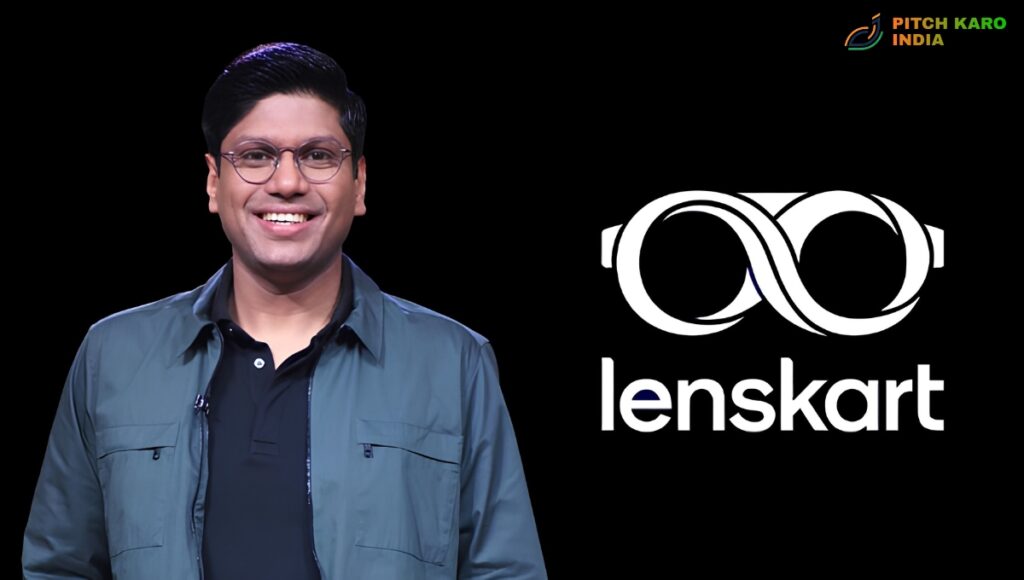
Peyush Bansal became even more popular after appearing as an investor on Shark Tank India. His practical advice, balanced investment decisions, and supportive attitude introduced him to millions of viewers.
His television presence also strengthened public trust in the Lenskart brand, although the company’s success had already been built through years of innovation and execution.
Challenges Along the Way
Building Lenskart was not without obstacles. The company had to educate consumers about buying eyewear online, establish trust in digital prescriptions, manage logistics, compete with local optical shops, and continuously invest in technology. Despite these hurdles, Peyush and his team remained focused on delivering value to customers.
Innovation as a Long-Term Strategy
Rather than remaining satisfied with early success, Lenskart continues investing in research and development. Artificial Intelligence, smart manufacturing, automation, customer analytics, and digital eye-care solutions remain central to the company’s future strategy. Continuous innovation allows Lenskart to stay ahead in an increasingly competitive market.
Key Achievements
| Achievement | Impact |
|---|---|
| Built India’s largest eyewear brand | Market leadership |
| Created omnichannel retail model | Better customer experience |
| Expanded internationally | Global recognition |
| Invested in manufacturing | Improved quality and efficiency |
| Introduced AI technologies | Enhanced digital shopping |
| Millions of satisfied customers | Strong brand loyalty |
Lessons Entrepreneurs Can Learn from Peyush Bansal
Peyush Bansal’s journey offers valuable lessons for aspiring entrepreneurs. The biggest opportunities often exist in industries that others ignore. Solving everyday problems can create billion-dollar businesses. Technology should improve customer experience rather than complicate it.
Long-term trust is more valuable than short-term profits. Innovation must continue even after achieving success. Perhaps the most inspiring lesson is that no industry is too ordinary to transform. Vision, execution, and persistence can turn even the simplest business into an industry leader.
The Future of Lenskart
The future looks promising for Lenskart as digital adoption continues to rise and consumers become increasingly conscious of eye health and fashion. The company is expected to strengthen its manufacturing capabilities, expand its international footprint, introduce more AI-driven services, and explore smart eyewear innovations.
With rising screen time and growing awareness about vision care, demand for quality eyewear is likely to increase in the coming years. Lenskart appears well-positioned to meet this demand while continuing to redefine the eyewear industry.
Conclusion
Lenskart’s remarkable journey proves that extraordinary businesses do not always emerge from glamorous industries. Peyush Bansal recognised an overlooked market, understood customer pain points, and built a company that transformed the way millions of people buy eyewear. Through technology, innovation, affordability, and an unwavering commitment to customer satisfaction, Lenskart has become far more than an eyewear retailer. It has become a symbol of modern Indian entrepreneurship.
The story reminds aspiring founders that success comes from identifying genuine problems and solving them better than anyone else. Peyush Bansal’s vision turned an ordinary category into one of India’s most admired startup success stories, showing that with determination and the right strategy, even the most overlooked industries can create global giants.