HomeLane: The Story of the Home Interior Brand Making Beautiful Homes More Accessible
HomeLane: There is something deeply personal about building a home. A house may give us walls, rooms and a roof, but it is the interiors that make the space feel truly ours. The colours we choose, the kitchen where family meals are prepared, the bedroom where we unwind after a long day and the living room where conversations happen all become part of our everyday memories. Yet, turning a house into a well-designed home is not always easy. It can be expensive, confusing and time-consuming, especially when customers have to coordinate with different designers, contractors, carpenters and suppliers.
This is where HomeLane entered the picture. Founded in 2014, the company set out to make the home-interior experience more organised and convenient for customers. Instead of leaving homeowners to manage every small detail themselves, HomeLane built its business around providing a more structured interior-design journey.
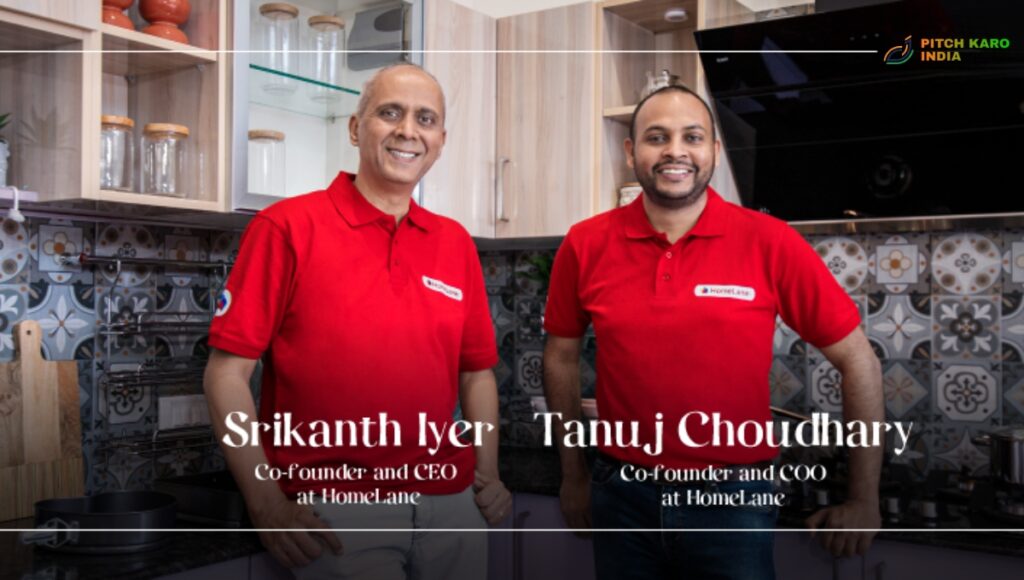
Behind this journey are five co-founders: Srikanth Iyer, Tanuj Choudhry, Rama Harinath K, Srini Battula and Prabhu Venkatesh. Among them, Srikanth Iyer serves as the Co-Founder and Chief Executive Officer, while Tanuj Choudhry serves as the Co-Founder and Chief Operating Officer. The founding team brought together leadership and operational experience to build a company focused on changing how people approach home interiors.
The Beginning of HomeLane
HomeLane was founded in 2014 at a time when India’s home-interior industry was becoming increasingly important as urban households looked for more organised and professional ways to design their living spaces. For many homeowners, the traditional interior-design process could be difficult to navigate. Customers often had to find designers, negotiate with contractors, select materials, supervise work and keep track of timelines themselves. The founders saw an opportunity to simplify this experience.
HomeLane was created with the idea that designing a home should not feel like an endless chain of disconnected tasks. Instead, the process could be brought together through a more organised model where customers could work with professionals while having greater visibility into their interior project.
The company’s journey reflects a broader change in the Indian consumer market. As people became more comfortable researching products and services online, expectations also changed. Customers wanted convenience, transparency and professional support. They wanted to be able to explore designs, discuss their preferences and understand what they were getting without having to become experts in construction or interior work. HomeLane emerged in this changing environment with a clear focus on home interiors.
Srikanth Iyer: The Co-Founder and CEO
At the centre of HomeLane’s leadership is Srikanth Iyer, who serves as the company’s Co-Founder and Chief Executive Officer. As CEO, he has played a key role in shaping the company’s overall direction and helping build its approach to the home-interior market. Building a company in the home-interior space requires more than understanding design. It requires an understanding of customers, operations, technology, project management and the many small details involved in delivering an interior project.
The challenge becomes even bigger when a business wants to create a consistent customer experience across multiple projects. Every homeowner has different expectations. One family may want a modern minimalist kitchen, while another may prefer a more traditional style. One customer may prioritise storage, while another may care more about aesthetics. For a company like HomeLane, creating a system that can accommodate these individual needs while maintaining quality and consistency is an important part of the business challenge.
Srikanth Iyer’s role as CEO places him at the centre of this larger mission. His leadership has been connected with HomeLane’s effort to create a more organised approach to home interiors and make professional interior services easier for customers to access.
Tanuj Choudhry and the Operational Side of HomeLane
Tanuj Choudhry is another key figure in HomeLane’s founding story. He serves as the Co-Founder and Chief Operating Officer of the company. The COO role is particularly important in a business like home interiors because the final customer experience depends heavily on execution. A beautiful design on paper means very little if the project is not delivered properly.
Home interiors involve several moving parts. Designs need to be finalised, materials need to be selected, manufacturing and installation need to be coordinated, and different stages of the project need to move forward according to the agreed plan.
This is where strong operations become critical. Choudhry’s role as COO places him close to the systems and processes that support the company’s operations. His contribution to the founding team is therefore an important part of the story of how HomeLane has approached the complicated nature of interior projects.
For customers, good operations are often invisible when everything works properly. But behind a smooth interior project is a large amount of coordination and planning.
The Other Co-Founders
HomeLane was not built by a single founder. The company was founded by a team of five, with Rama Harinath K, Srini Battula and Prabhu Venkatesh joining Srikanth Iyer and Tanuj Choudhry in creating the company. The presence of multiple founders highlights the different capabilities required to build a large consumer-facing interior business.
A home-interior company sits at the intersection of design, technology, manufacturing, customer service and operations. Building such a business requires people who can think beyond one part of the customer journey.
Rama Harinath K, Srini Battula and Prabhu Venkatesh were part of the founding team that helped establish HomeLane in its early stage. Together with Iyer and Choudhry, they formed the leadership foundation on which the company was built.
While customers may primarily see designers, products and finished interiors, the creation of a company like HomeLane involves much more work behind the scenes.
Why Home Interiors Needed a New Approach
Home interiors can be an exciting experience, but they can also become stressful. Imagine moving into a new apartment and wanting to create a beautiful kitchen, bedroom and living room. You may know what you like, but knowing how to turn that idea into reality is another matter entirely.
You may need to think about measurements, layouts, materials, colours, storage, lighting, furniture and budgets. Then there is the question of finding reliable professionals and making sure that different parts of the project fit together.
For someone doing this for the first time, the process can quickly become overwhelming.
HomeLane’s business was built around making this experience more structured. The idea was to give homeowners access to professional interior-design support while reducing some of the complexity involved in executing a home project.
This approach also reflects the changing expectations of Indian consumers. People increasingly want services that are convenient and transparent. They want to know what they are buying, how the process works and what they can expect from the company they choose. HomeLane entered the market with a model designed around these expectations.
Technology and the Modern Interior Experience
Technology has changed almost every part of our lives, and home interiors are no exception. Today, customers can explore thousands of interior ideas online before speaking with a designer. They can save references, compare styles and develop a clearer idea of what they want. This has changed the relationship between customers and interior professionals.
A modern interior brand therefore has to do more than simply offer design services. It has to understand how customers discover, compare and make decisions. HomeLane’s story is part of this broader transformation.
The company represents an effort to bring a more organised and technology-enabled approach to an industry that has traditionally depended heavily on fragmented offline processes. For homeowners, this can mean a more guided journey. Instead of having to figure out every stage independently, they can work with professionals who understand the design and execution process.
The Human Side of Home Design
Despite all the discussion around technology and organised systems, the heart of interior design remains deeply human. A home is not just a project. It is where people celebrate birthdays, welcome friends, raise children, relax after work and create memories. Every family has different needs, habits and preferences. That is why interior design cannot be completely standardised. A good home has to reflect the people living in it. A family with young children may need practical storage and durable surfaces.
Someone who loves cooking may want a kitchen designed around their routine. A person working from home may need a dedicated workspace. Another homeowner may simply want a peaceful bedroom where they can disconnect from the outside world. These differences make home interiors personal. The role of an interior company is therefore not simply to create attractive spaces. It is to understand how customers live and translate those needs into functional and beautiful environments.
Building a Recognisable Home-Interior Brand
When HomeLane started in 2014, the Indian home-interior market was already populated by designers, contractors and local businesses. The challenge was to create a more recognisable and scalable approach. This required more than attracting customers. The company needed to build trust.
Home interiors involve significant spending, and customers naturally want confidence before committing to a project. They want to know that the company understands their requirements and can deliver what has been promised. Brand trust therefore becomes an important part of the journey.
HomeLane’s identity has been built around making professional home interiors easier to approach for customers who want a more structured experience. This is particularly relevant for younger homeowners who may be purchasing their first apartment or creating their first independent home.
The Founding Team’s Bigger Challenge
The story of HomeLane is also a story about execution. Starting a company is difficult. Starting a company in a sector where every project is different adds another layer of complexity.
A software company may be able to release the same product to thousands of users. Home interiors are different. Every home has different dimensions, customer expectations, budgets and design choices. That means the business has to balance standardisation with personalisation. It needs systems that make operations efficient while still allowing customers to create spaces that feel unique.
This is one of the most interesting aspects of HomeLane’s business story. The company is trying to bring structure to an industry where individuality matters.
From a Startup Idea to a Home-Interior Business
The journey from an idea to an established company is rarely straightforward. There are customer expectations to understand, operational challenges to solve and new competitors to face. For HomeLane’s founders, building the company meant creating a business around a simple but important consumer need: making the process of designing a home easier.
Srikanth Iyer’s leadership as CEO and Tanuj Choudhry’s role as COO have been central to the company’s leadership structure, while Rama Harinath K, Srini Battula and Prabhu Venkatesh form the rest of the founding team. Together, the founders established HomeLane in 2014 and set the company on a path within India’s evolving home-interior market.
What Makes HomeLane’s Story Interesting
The most interesting part of HomeLane’s story is not simply that five people founded an interior company. It is the problem they chose to solve.
Home interiors are something millions of people experience, but the process has historically been complicated. Customers often know what they want their home to feel like, but turning that feeling into a finished space can require significant time, money and coordination. HomeLane represents an attempt to make that journey more organised. Its story also shows how traditional industries can change when technology, customer expectations and professional services come together.
The home-interior industry may always need designers, craftsmen, installers and people working with physical materials. But the way customers discover, plan and manage these services is changing. That change creates opportunities for companies that can combine creativity with operational discipline.
The Future of Home Interiors
The future of home interiors is likely to become even more technology-driven, but technology alone will not define the best companies in the industry. Customers will continue to want beautiful designs, but they will also expect convenience, clarity and reliability. They will want to participate in the design process while having professionals guide them through decisions they may not understand.
Artificial intelligence, digital visualisation, online consultations and smarter project-management systems could make the interior journey even more interactive in the years ahead. But the fundamental expectation will remain the same. People want to come home and feel that the space belongs to them. That emotional connection is what makes the home-interior business different from many other consumer industries.
HomeLane’s founding story began in 2014 with Srikanth Iyer, Tanuj Choudhry, Rama Harinath K, Srini Battula and Prabhu Venkatesh. With Iyer leading as CEO and Choudhry serving as COO, the company entered an industry where creativity and execution have to work hand in hand. The company’s journey reflects a simple idea with a very human purpose: making the process of creating a home easier to understand, easier to manage and more accessible to modern homeowners.
For a customer, the final result may be a beautiful kitchen, a comfortable bedroom or a living room that finally feels complete. But behind that finished space is a much larger story involving design, planning, technology, operations and a team working to turn an idea into a place people can call home.
And perhaps that is the most meaningful part of HomeLane’s story. It is not really about walls, furniture or decoration. It is about helping people create a space where their everyday lives can unfold.
Disclaimer: This article is written for informational and educational purposes, based on information provided about HomeLane and its founding team. Founder roles and company-related information can change over time. Readers should verify the latest information through HomeLane’s official channels before relying on any details for business, investment, employment or other important decisions.