Flipkart Enters Food Delivery To Challenge Zomato And Swiggy
Flipkart: When people think of Flipkart, they usually think about smartphones, fashion, electronics, or festive shopping sales. However, India’s e-commerce giant is now aiming to become much more than an online shopping platform. Consumer habits have changed dramatically over the past few years, and people increasingly prefer using a single app for multiple daily needs instead of switching between several applications.
Recognising this shift, Flipkart is preparing to enter India’s food delivery industry, taking on established players like Zomato, Swiggy, and the newer entrant Rapido Only. If successful, this move could significantly reshape the country’s digital commerce landscape and strengthen Flipkart’s position as an all-in-one digital ecosystem.
Flipkart Is Preparing to Enter Food Delivery
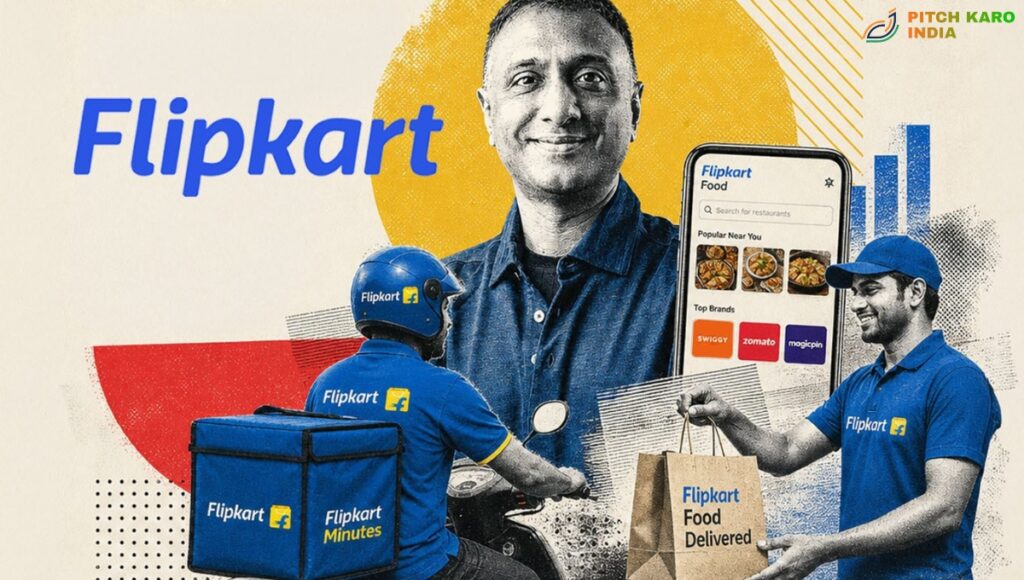
According to industry reports, Flipkart is expected to launch its food delivery service within the next few weeks. The company is likely to begin with a pilot programme in Bengaluru before deciding whether to expand into more cities across India. Although the food delivery market has been dominated for years by Zomato and Swiggy, Flipkart believes there is still room for innovation and stronger competition. The company appears ready to leverage its massive customer base and technology infrastructure to establish itself in this highly competitive segment.
A Marketplace Model Instead of Cloud Kitchens
Unlike some recent entrants that have invested in cloud kitchens and private food brands, Flipkart is expected to follow a marketplace model. Instead of preparing food itself, the company plans to partner with existing restaurants, allowing customers to order directly from their favourite eateries.
This strategy enables Flipkart to avoid the operational challenges of managing commercial kitchens while offering customers a broader selection of restaurants from the very beginning. Reports also suggest that the company may utilise the Open Network for Digital Commerce (ONDC) to onboard restaurant partners more efficiently.
Food Delivery Is More Than Just Another Service
For Flipkart, entering food delivery is not simply about adding another business category. The larger objective is to make the Flipkart app a part of consumers’ everyday routines. Traditional ecommerce platforms are usually visited only when customers need to buy specific products. Food delivery changes this behaviour because meals are ordered much more frequently.
If customers begin opening the Flipkart app daily for breakfast, lunch, dinner, or snacks, the company naturally increases engagement. This creates opportunities to recommend groceries through Flipkart Minutes, fashion from Myntra, electronics, home products, and other services available within its expanding ecosystem.
Flipkart’s Biggest Advantage Is Its Massive User Base
One of Flipkart’s strongest competitive advantages is its enormous customer base. Reports indicate that the platform already has more than 500 million registered users. This gives Flipkart an immediate audience that many new startups would take years to build.
Instead of spending heavily on customer acquisition, Flipkart can introduce food delivery to users who already trust the platform for shopping, payments, and quick commerce. Existing customers are generally more willing to try new services from brands they already know and use regularly.
Competing With Zomato and Swiggy Won’t Be Easy
Although Flipkart has considerable resources, entering the food delivery business will not be easy. Zomato and Swiggy have spent years building extensive restaurant partnerships, delivery networks, advanced logistics systems, and loyal customer bases.
Winning market share will require much more than attractive discounts. Flipkart must ensure fast deliveries, reliable customer service, competitive pricing, excellent restaurant partnerships, and a seamless user experience. Consumers today have very high expectations, and consistency will be one of the company’s biggest challenges.
Why Restaurant Owners May Welcome Flipkart
Restaurant owners across India have repeatedly expressed concerns about high commission charges, delivery fees, advertising expenses, and promotional costs associated with existing food delivery platforms. Many businesses argue that after paying commissions of nearly 18% to 28%, their profit margins become extremely limited.
This dissatisfaction has created opportunities for new companies entering the market. Rapido’s Ownly has already attempted to position itself as a restaurant-friendly alternative. Flipkart could potentially attract restaurant partners by offering more favourable commercial terms, although the company has not officially revealed its pricing structure.
Flipkart Has the Financial Strength to Compete
Backed by Walmart, Flipkart has spent years competing with Amazon in one of the world’s most competitive e-commerce markets. This experience has helped the company build a robust logistics network, improve customer experience, and invest in long-term growth.
However, food delivery is a completely different business. Customers expect meals to arrive quickly, fresh, and in perfect condition. Managing delivery partners, restaurant coordination, and customer satisfaction requires operational excellence that differs significantly from traditional e-commerce.
Building India’s Largest Digital Commerce Ecosystem
Food delivery is only one part of Flipkart’s broader strategy. Over the past few years, the company has expanded far beyond online shopping. Through Flipkart Minutes, it entered quick commerce. Myntra strengthened its leadership in online fashion, while Cleartrip gave the company a strong presence in travel bookings.
Reports also suggest that Flipkart is considering entering the online ticket booking industry. If these plans move forward, users may eventually book movies, concerts, sporting events, and live entertainment through Flipkart as well.
How Flipkart Wants to Become an Everyday App
Imagine a customer purchasing a smartphone from Flipkart. Later, the same customer orders groceries through Flipkart Minutes, shops for clothes on Myntra, books flights through Cleartrip, purchases home appliances from Flipkart’s marketplace, orders dinner through Flipkart Food, and eventually books entertainment tickets without leaving the Flipkart ecosystem.
View this post on Instagram
This integrated experience represents Flipkart’s long-term vision. Rather than asking customers to switch between multiple apps throughout the day, the company wants to become a one-stop destination for almost every digital need.
What This Means for Indian Consumers
Greater competition usually benefits consumers. If Flipkart successfully enters food delivery, customers may enjoy improved services, competitive pricing, faster deliveries, better loyalty programmes, and more choices. Restaurants may also benefit from having another large platform through which they can reach customers.
At the same time, success will depend entirely on execution. The company must deliver consistent service quality while maintaining healthy relationships with restaurants and delivery partners.
Can Flipkart Really Challenge the Market Leaders?
Flipkart certainly has the technology, financial backing, and customer base required to enter the market. However, competing against companies that have specialised in food delivery for years will require patience, innovation, and operational excellence.
If the company successfully combines its ecommerce expertise with an efficient food delivery network, it could emerge as a serious competitor to Zomato and Swiggy. If not, the challenges of this fast-moving industry could prove much greater than expected.
The Future of Flipkart’s Digital Empire
Flipkart’s transformation from an online bookstore into one of India’s largest digital commerce companies has already changed the country’s ecommerce landscape. Food delivery represents another important step in its journey towards becoming an everyday digital companion for millions of users.
As India’s digital economy continues to grow, consumers increasingly value convenience above everything else. Flipkart appears determined to build an ecosystem where shopping, groceries, travel, fashion, food, and entertainment all come together under one digital roof.
Conclusion
Flipkart’s entry into the food delivery industry is much more than a business expansion. It reflects the company’s long-term ambition to become an all-in-one digital commerce platform that serves customers throughout the day. While the road ahead will be challenging due to strong competition from Zomato, Swiggy, and emerging players, Flipkart possesses the financial strength, technology, and massive customer base needed to compete effectively. If executed successfully, this move could redefine India’s digital commerce ecosystem and provide consumers with greater convenience, better choices, and improved competition across multiple sectors.