
From Restaurant Chaos To On-Demand Support: How Sanjeev Kumar Built RESTOCARE To Solve A Real Industry Problem
How Sanjeev Kumar built RESTOCARE. The idea for RestoCare came from repeatedly seeing restaurant owners struggle with urgent operational problems. When a chef or waiter did not show up, equipment suddenly…
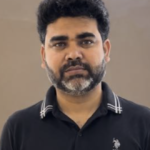
RESTOCARE: Running a restaurant may look glamorous from the outside. Customers see delicious food, busy dining rooms and smiling staff. Behind the scenes, however, restaurant owners deal with a completely different reality. One missing chef, a broken refrigerator, an absent waiter or an urgent hygiene issue can create problems within minutes.
For Sanjeev Kumar, the founder of RESTOCARE, these everyday challenges became impossible to ignore.
He repeatedly saw restaurant owners struggling to find reliable operational support when they needed it most. A chef might suddenly stop coming to work. A technician might be unavailable when critical equipment broke down. Emergency cleaning could become necessary just before a busy service. In many cases, owners had to depend on personal contacts, phone calls and WhatsApp groups to find someone at short notice.
The problem was not necessarily a lack of service providers.
The problem was reliability, speed and accessibility.
Restaurants could order ingredients, supplies and other essentials almost instantly, yet there was no equally dependable way to arrange operational support on demand. That gap became the starting point for RESTOCARE.
The vision was straightforward: create a single platform where restaurants could quickly find and book verified professionals for staffing, technical support and hygiene-related requirements whenever an urgent need arose.
What started with an observation about restaurant operations has now grown into a revenue-generating business serving restaurants across Delhi NCR.
The Problem Behind RESTOCARE
Restaurant businesses operate on timing. A delayed delivery can cause frustration. A broken piece of kitchen equipment can stop operations. But when a key staff member does not arrive during peak hours, the impact can be even bigger. Orders may be delayed. Customers may leave unhappy. Existing employees may become overloaded.
Revenue can be lost.
For a restaurant owner, these problems are not theoretical. They can happen without warning, sometimes at the worst possible moment. Sanjeev saw restaurant owners dealing with these situations repeatedly. Their businesses could be worth lakhs of rupees, yet when they needed urgent operational help, many still depended on informal networks.
One phone call would lead to another.
A WhatsApp message would be sent to a group. Someone would recommend a person. The person might not be available. Then the search would begin again. This process was inefficient and stressful. RESTOCARE was created to bring structure to this fragmented process.
Instead of leaving restaurants to search for help whenever something went wrong, the platform aims to provide access to verified service professionals through a more organised system.
The Moment Sanjeev Decided to Take the Risk
Every founder eventually faces a difficult choice. Stay on the safe path or take a risk on an idea that might become something meaningful. For Sanjeev, the decision to build RESTOCARE came from seeing the cost of the problem up close.
Restaurant owners were not simply facing small inconveniences. Staff shortages, equipment failures and emergency operational requirements could directly affect customer satisfaction and revenue. Sanjeev realised that the problem was happening too often to be ignored.
The safer option would have been to continue with a predictable path. But stability would not solve the problem he had identified. That realisation became the motivation to take the risk.
He began speaking directly with restaurant owners, understanding their operational challenges and exploring what a dependable solution could look like. The idea was not to create another platform simply because technology was available.
The objective was to solve a problem that businesses were already experiencing. That distinction became important. RESTOCARE was born from demand, not just imagination.
Building a Solution for an Industry That Cannot Wait
One of the biggest challenges in restaurant operations is that problems often need to be solved immediately. A restaurant cannot always wait two days for a technician. It cannot necessarily wait until next week to find a replacement chef. It may need cleaning support within hours.
This means a solution for the industry must be designed around urgency. RESTOCARE’s approach is built around providing restaurants with access to professionals when operational requirements arise.
The platform connects restaurants with different categories of service providers, including chefs, waiters, kitchen helpers, housekeeping staff, technicians and hygiene professionals.
The idea is to make the process more organised and dependable than relying entirely on personal contacts. But creating such a system involves much more than simply listing workers on an app.
The real challenge is ensuring that the people available through the network can be trusted. That became one of the most important lessons in the early journey of RESTOCARE.
The Part of Entrepreneurship Nobody Sees
The early days of a startup are rarely as smooth as they appear from the outside. For Sanjeev, one of the hardest periods came when restaurants had started trusting RESTOCARE with urgent requirements while the company’s partner network and internal systems were still developing. That created a difficult responsibility.
When a restaurant needs someone urgently, the customer does not care how complicated the startup’s internal situation may be. They simply need the problem solved. A last-minute cancellation could leave a restaurant understaffed during its busiest hours.
A service professional might become unavailable. A replacement might need to be found immediately. And every failure could potentially damage the trust RESTOCARE had worked hard to build.
During this phase, Sanjeev often had to personally handle coordination, make numerous calls, manage workers and respond to customer complaints, sometimes late into the night.
At the same time, he was dealing with the financial and operational realities of building a young company. The challenge was not just the amount of work. It was the pressure of knowing that every customer interaction could influence whether the business earned another opportunity.
Learning That RESTOCARE Had to Be More Than a Booking Platform
Those difficult experiences changed the way Sanjeev looked at the business. He realised that simply creating a platform where restaurants could request services was not enough. RESTOCARE needed to build a dependable operational network.
That meant focusing on verified partners, training, backup resources and strong on-ground execution. A restaurant owner does not necessarily want another app to manage.
They want the problem to disappear. That difference is critical. Technology can make a booking easier, but reliability determines whether a customer comes back.
For RESTOCARE, the goal gradually shifted from building a booking platform to becoming an operational support partner that restaurants could depend on. That shift helped shape the company’s approach.
The First Sign That Something Was Working
The most meaningful validation for an early-stage business often comes from something surprisingly simple. Customers come back. For RESTOCARE, the first major sign of traction came when restaurants started returning without needing to be chased.
One restaurant initially used RESTOCARE to fulfil an urgent staffing requirement. The service was successfully delivered, and instead of being a one-time transaction, the relationship continued.
The restaurant came back with additional bookings. Then referrals began appearing. For Sanjeev, this was a major turning point. Until that moment, the team was proving that it could provide a service.
Repeat customers proved something more important. They were showing that RESTOCARE was solving a problem they genuinely cared about. The business was no longer simply convincing restaurants to try the service. Restaurants were choosing to use it again.
A 72% Repeat-Order Rate Changed the Perspective
One of the strongest indicators of RESTOCARE’s current traction is its reported repeat-order rate of 72%. For a business built around operational support, repeat usage can be especially meaningful. It suggests that restaurants are not viewing the platform as a one-time emergency solution. Instead, many are beginning to see RESTOCARE as an ongoing operational resource.
This changed the company’s focus. The challenge was no longer only about acquiring customers. It became about creating a system capable of serving those customers consistently as demand grew.
That meant improving operations, expanding the professional network and strengthening the technology supporting the business. For Sanjeev, the question evolved from “Can we solve this problem?” to “Can we build a system that solves it reliably at scale?”
Where RESTOCARE Stands Today
Today, RESTOCARE has moved well beyond the idea stage. The company is operating as a revenue-generating business across Delhi NCR, with more than 150 restaurant clients, over 200 service professionals onboarded, and more than 1,200 bookings completed, according to the information provided.
The business has also reported revenue growth, with its latest reported revenue reaching ₹14.55 lakh, compared with ₹9.69 lakh within two months. The 72% repeat-order rate adds another important dimension to those numbers.
It indicates that RESTOCARE is developing recurring demand rather than depending entirely on first-time customers. The platform currently supports restaurant requirements across several areas.
Restaurants can use RESTOCARE to find chefs, waiters, kitchen helpers, housekeeping professionals, technicians and hygiene service providers. This allows the company to address multiple operational problems through one ecosystem. The business now has a working platform, paying customers, repeat demand and an expanding network of service professionals.
From Emergency Support to an Operational Ecosystem
The bigger opportunity for RESTOCARE lies in what the platform could become over time. Restaurants have many operational requirements, but those needs are often fragmented. A restaurant may need temporary staff today, equipment maintenance tomorrow and hygiene support the following week.
If those requirements can be handled through one trusted ecosystem, the platform could become much more valuable than a simple emergency booking service. That is where RESTOCARE’s long-term potential becomes interesting. The goal is not simply to find someone when a restaurant has a problem.
The larger vision is to build an organised network where restaurants can access reliable operational support whenever they need it. For service professionals, this could also create opportunities to connect with businesses that require their skills.
That creates a two-sided ecosystem, with restaurants on one side and verified professionals on the other. The strength of such a model ultimately depends on trust, service quality and the ability to deliver consistently.
Why Reliability Matters More Than Speed Alone
In an on-demand business, speed is important. But speed without reliability can create a bigger problem. A restaurant owner may receive a replacement worker quickly, but if that worker is not suitable or fails to show up, the restaurant is back where it started.
That is why RESTOCARE’s early experience highlighted the importance of verification, backup resources and operational coordination. The company’s challenge is not simply to respond quickly.
It is to respond with the right person, at the right time, with a level of reliability that restaurants can trust.
That is also where the experience of building the company becomes valuable. Every difficult booking can reveal something about how the system needs to improve. Every cancellation can highlight the need for stronger backup mechanisms.
Every customer complaint can point toward a process that needs to be redesigned. For a startup, those lessons can become part of the foundation for scale.
The Road Ahead for RESTOCARE
The next phase of RESTOCARE is focused on strengthening its technology and operations across Delhi NCR before expanding into other major Indian cities. That is an important approach for a business that depends heavily on local execution.
Expansion is not simply about opening in a new city. A reliable operational network has to be built in each market. There must be enough service professionals. There must be quality control. There must be efficient coordination. There must be customer demand.
And most importantly, the service must maintain the same level of reliability as the company grows. For RESTOCARE, Delhi NCR provides an opportunity to strengthen that foundation before taking the model to other markets.
If successful, the company could eventually build a much larger network connecting restaurants with operational support professionals across multiple Indian cities.
The Human Side of Sanjeev Kumar’s Founder Journey
Behind the numbers and business model is a founder who experienced the problem directly through conversations and interactions with restaurant owners. Sanjeev’s journey reflects a common pattern in entrepreneurship. A founder notices something that people have accepted as normal. They begin asking why it has to remain that way.
Then they decide to build a better alternative. The journey that follows is rarely easy. There are calls that do not get answered.
Customers who say no.
Workers who cancel at the last minute.
Financial pressures.
Operational problems.
And days when the founder has to solve problems personally because the company is still too young to have a large team handling everything. Those experiences can be exhausting, but they also teach founders what their customers actually value. For Sanjeev, one of the biggest lessons was that trust cannot be built through promises alone. It has to be earned through repeated execution.
What Sanjeev Would Tell Someone Starting Today
If someone is standing at the same starting point where Sanjeev once stood, his message is simple: do not wait for everything to be perfect. You do not need the perfect product. You may not have the perfect team. You may not have enough funding. You may not even have every answer. Start by solving one genuine problem for one real customer. Then focus on delivering that solution better than expected.
In the early days, progress may not look impressive from the outside. It may look like dozens of phone calls. It may look like manually coordinating workers. It may mean dealing with rejection. It may involve personally fixing problems late at night.
That does not necessarily mean the business is going nowhere. It can mean the founder is learning exactly what customers value. The most important thing is to stay close to the problem. Listen more than you pitch.
Watch what customers actually do, not just what they say. And pay attention to the people who come back. A returning customer can sometimes tell you more about the value of your business than a hundred compliments.
Building Trust One Booking at a Time
RESTOCARE’s story is ultimately about trust. A restaurant owner has to trust that when they make a request, someone will respond. They need to believe that the service professional will be suitable. They need confidence that if something goes wrong, RESTOCARE will work to find a solution.
That trust is not created overnight.
It is built booking by booking.
One successful emergency staffing requirement.
One technician arriving when needed.
One hygiene service completed properly.
One restaurant returning with another booking.
Then another referral.
Slowly, those individual experiences become a reputation. And reputation can become one of the most valuable assets a startup has.
From a Simple Observation to a Growing Business
RESTOCARE began with a simple observation: restaurants needed operational help, but finding reliable support during emergencies was unnecessarily difficult.
Sanjeev Kumar chose to act on that observation. The journey took him from identifying the problem to speaking directly with restaurant owners, building a service network, handling operational challenges and developing a platform designed around real restaurant needs.
There were difficult moments.
There were doubts.
There were nights spent coordinating urgent requirements.
But there were also moments of validation.
Restaurants returned.
Customers referred others.
Bookings grew.
Revenue followed.
Today, RESTOCARE has a growing base of restaurant clients, an expanding network of service professionals and a reported 72% repeat-order rate. The company is still building. The next challenge is to make its operations stronger, improve its technology and eventually take the model beyond Delhi NCR. But the foundation has already been laid.
The Journey Is Just Getting Started
The most interesting part of the RESTOCARE story may be that it did not begin with a complicated vision. It began with a real problem. Restaurant owners needed help when things went wrong. Sanjeev saw the gap and decided to build a solution. What started as an idea has now become a functioning business with paying customers, recurring demand and a growing service network.
The road ahead will bring new challenges. Scaling operations, maintaining quality and expanding into new cities will test the company’s ability to turn early traction into a sustainable business. But the lesson from the journey so far is clear.
A startup does not always begin with a revolutionary idea. Sometimes, it begins by noticing an everyday problem and deciding that people deserve a better way to solve it.
For Sanjeev Kumar and RESTOCARE, that decision transformed restaurant emergencies from a frustrating problem into an opportunity to build something useful. The journey continues, one restaurant, one booking, and one solved problem at a time.
Disclaimer: This article has been written based on the information provided about Sanjeev Kumar and RESTOCARE. The business figures, customer numbers, booking volumes, revenue figures, repeat-order rate, service categories and expansion plans are presented as provided and should be independently verified through official company records or other authoritative sources before being used for investment, financial, commercial or professional decisions. Business performance and future plans may change over time.
Every founder here started exactly where you are.
Answer six questions from Aria, our story guide, about ten minutes. Our editors shape it, and the best journeys get published right here.
Other founders, other roads.

From Jewellery Merchandiser To AI Entrepreneur: How Roshan Varma Is Building Jeweality To Transform Jewellery Design
The idea for Jeweality came from my own frustration while working as a jewellery merchandiser. I would create a new…
Read the story
From A Placement Season Problem To A Bigger Mission: How Anushka De Started Building Placemint
How Anushka De built Placemint. I was doing my 4th year in Btech and UEM, and as usual we had…
Read the storyFrom Limited Exposure to a Bigger Vision: How Jayanth Babu C Is Building Nirmaan@2026 for India’s Students
How Jayanth Babu C built Nirmaan@2026. We started our education in a very normal convent school with a typical study-exam…
Read the story